All Commercial Services
The full commercial scope across office, retail, industrial, community and parking property.
Commercial pressure washing →Community association work runs on a different clock from everything else in this trade. The scope is set by a board or a community association manager, priced as a bid, approved at a meeting, funded from an operating budget or a reserve line, and then delivered across a property where several hundred people live and every one of them can complain about it.
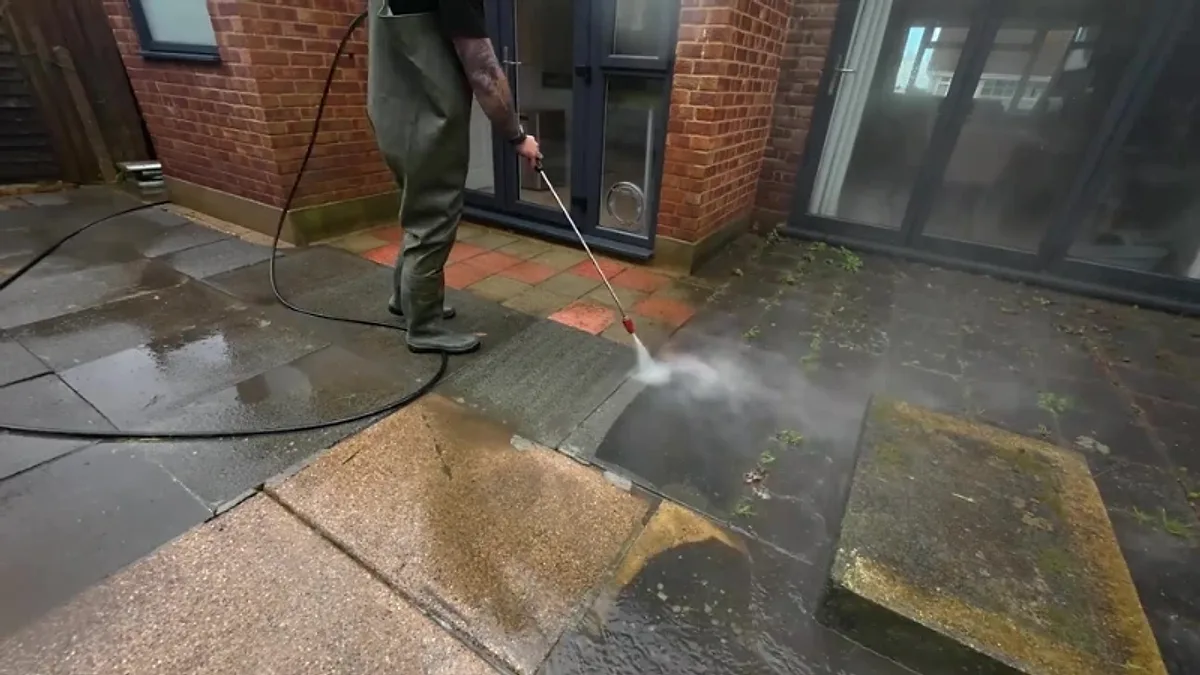
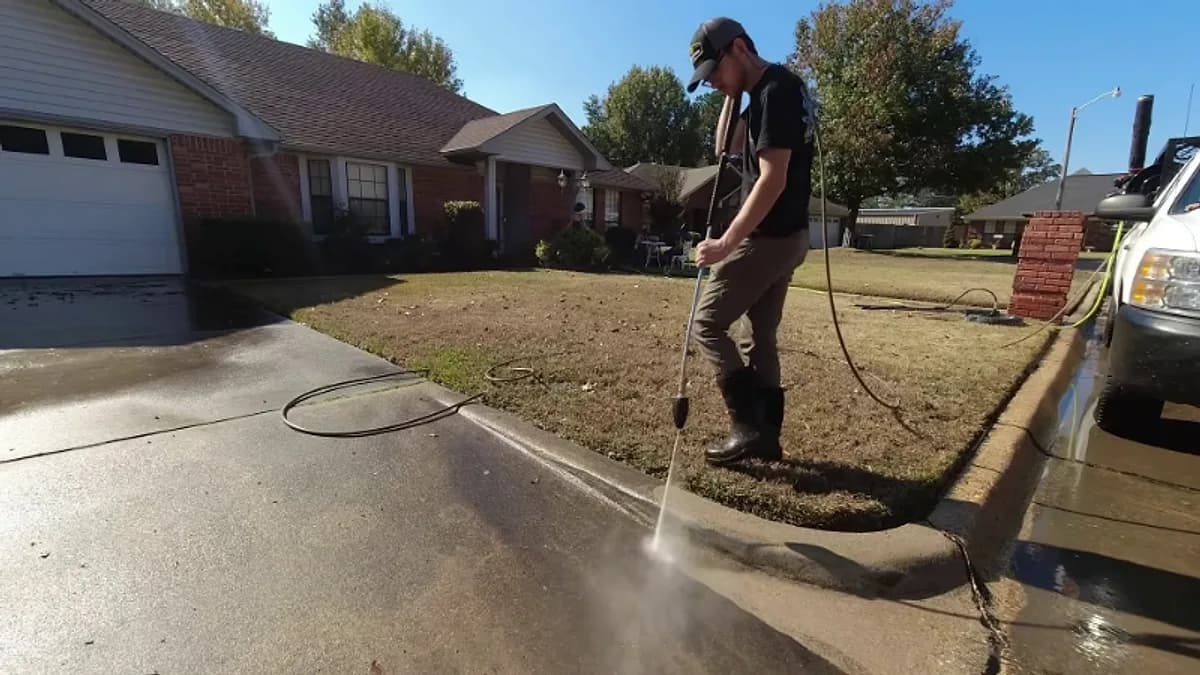
Jacksonville Cleaning Pros cleans common areas and shared structures for homeowner associations, condominium associations, townhome communities and the management companies that run them across Duval, Clay, St Johns and Nassau counties. Work is quoted by area so a board can see exactly what each line buys, scheduled with enough notice for residents, and documented on completion.
Call (904) 938-8585 to arrange a walk-through, or request a bid packet for your next board meeting.
Most communities do not need everything cleaned every year. These are the areas that show wear first in this climate:
The entry monument, the wall it sits in and the surrounding hardscape are what every resident and every prospective buyer sees. Rendered and painted monument walls hold algae on the shaded face, and irrigation heads leave rust bleed and mineral staining across the base. This is a low-cost, high-visibility line item and it is usually the first thing a new board approves.
Shared paths, sidewalk sections along common frontage, boardwalks and the concrete around amenity buildings. These are slip-hazard surfaces, not appearance surfaces. Green film on a shaded path after a wet week is the specific thing that generates both complaints and incident reports.
Clubhouse exterior, covered walkways, restroom buildings and the pool deck. Pool decks around shared amenities take chemical exposure, sunscreen residue and heavy foot traffic, and they need a method matched to the surface rather than raw pressure. See pool deck and patio cleaning for how those surfaces are handled.
Small structures nobody notices until they are streaked. Perimeter walls along a main road pick up road grime on the outside and algae on the shaded inside face. Vinyl and aluminum fencing around common areas cleans quickly and makes a visible difference to a community's overall condition.
Pavilions, playground surrounds, dog park slabs, tennis and pickleball court surrounds. These are frequently owned by the association and just as frequently left out of the maintenance scope until somebody photographs them for a violation report.
Clubhouses, maintenance buildings and covered structures owned by the association. Black streaking on those roofs is organic growth and is treated with a no-pressure method. See roof soft washing and gutter cleaning.
If you are a homeowner rather than a board member and you have a notice about a dirty roof, a stained driveway or algae on your siding with a deadline attached, that is a single-property job and it is usually handled inside a week. The three surfaces that generate most violation notices in Jacksonville communities are roofs with black streaking, driveways with organic growth or rust bleed, and house exteriors with mildew on the shaded elevations. Those are covered on roof cleaning, driveway and concrete cleaning and house washing and soft washing. Call with the deadline date and the scheduling gets built around it.
Communities here share a set of conditions that put common areas on a predictable decline. Heavy summer rainfall and sustained humidity keep shaded surfaces damp for long stretches. Mature oak and pine canopy over walkways and entry features drops organic debris and blocks the sun that would otherwise dry the surface. Irrigation running on shared turf throws mineral-heavy water onto adjacent concrete and walls, which is where rust and orange staining comes from. Communities closer to the Intracoastal and the beaches also carry airborne salt residue on painted and metal surfaces.
The result is that a community cleaned on a fixed annual or semi-annual cycle stays in a maintainable condition, and one cleaned reactively ends up needing restoration work on surfaces that should have just been washed.
The process is built around the way boards actually make decisions:
Every common area is inventoried and measured, with photographs of the areas in the worst condition.
Each area is priced separately: entrance, walkways, clubhouse, pool deck, mailbox kiosks, fencing. A board can approve the whole scope or fund it in stages without asking for a new quote.
The proposal arrives in a form that can be attached to a meeting agenda, with scope, method, timing and insurance documentation in one document.
Communities in Florida typically adopt their budget ahead of the fiscal year, so proposals for recurring work are best presented before that meeting rather than after it. Ask us to time the quote to your cycle.
Dates confirmed in advance so notices can go out and landscaping or pool service can be worked around.
Recurring scopes are set up as a service agreement with fixed visit dates for the year, which is what makes the line item predictable in the budget.
Community work happens in the middle of people's homes, which sets the operating rules:
An association is governed by a board and a set of documents, the residents are owners, and the work is approved through a meeting and a budget. An apartment community has a single owner or operator, the residents are tenants, and the work is approved by a regional or on-site manager against an operating budget with far less lead time. The surfaces overlap. The scheduling, approval and reporting do not. If you manage an apartment or multifamily property, apartment and multifamily cleaning is the page you want. For office, retail, industrial or parking property, start from the commercial exterior cleaning overview.
Call us or send a message — we will give you a straight answer, whether or not it leads to a booking.
Call NowEither. Most communities prefer the proposal to go through the community association manager so it enters the agenda properly, and site coordination then runs between the manager and the crew. Where a self-managed community has a board member handling vendors, that person becomes the single point of contact.
By area, after a walk-through. Every common area is quoted as its own line so the board can see what each piece costs and approve part of the scope without needing a fresh quote. Pricing depends on square footage, surface type, access and how long it has been since the area was last cleaned. Recurring scopes are usually priced differently from a one-time clean because maintained surfaces take less time.
Entrances and heavily used walkways generally need attention two to four times a year. Clubhouse exteriors, amenity buildings and fencing are usually annual. Shaded paths under canopy and any surface that stays damp will need it more often than the same surface in full sun. A walk-through will tell you which areas in your community fall into which group.
Yes. Certificates are issued before work starts and can name the association, the management company or both, in whatever form your governing documents require.
Not for a full day. Areas are worked in sequence with notices posted in advance, so a given amenity is out of use for a defined window rather than the whole visit.
Yes, and it is usually cheaper per home than each owner arranging it separately. Communities sometimes coordinate a group booking after a compliance sweep, with each homeowner billed individually or the association covering it as a common expense, depending on the governing documents.
We cover all of Jacksonville and Duval County, from the historic districts to the beaches. If your neighborhood is not listed, it is still worth asking.
More on this service in communities around St. Johns.
Not sure if we reach you? Get in touch and we will tell you straight away.
Other property types in the commercial scope, each with its own operational detail.
The full commercial scope across office, retail, industrial, community and parking property.
Commercial pressure washing →Recurring, high-volume contract work with its own operational language that no other page can hold naturally.
Apartment & Multi-Family →Retail and food-service buyers need after-hours work and appearance-standard compliance. Gas station and QSR terms fold in here.
Storefront & Retail →Send the community name, the areas you want quoted and your next board meeting date. You get a walk-through, a line-item proposal and insurance documentation in a format you can put straight into the packet. Call (904) 938-8585 or contact us.
Call Now