Rust, Oil & Stain Removal
Targeted treatment for the stains ordinary washing leaves behind: irrigation rust, oil and grease spots, and adhered gum, each of which needs a different product.
Rust and stain removal →Professional graffiti removal in Jacksonville, FL helps restore concrete, brick, masonry, walls, pavement, storefronts, and other exterior surfaces after spray paint, marker tags, and vandalism. The right removal method depends on the graffiti, the surface underneath it, how deeply the material has penetrated, and the condition of the property.
If graffiti has appeared on your Jacksonville property, prompt removal can restore the appearance of the surface and prevent the problem from becoming more difficult to address.
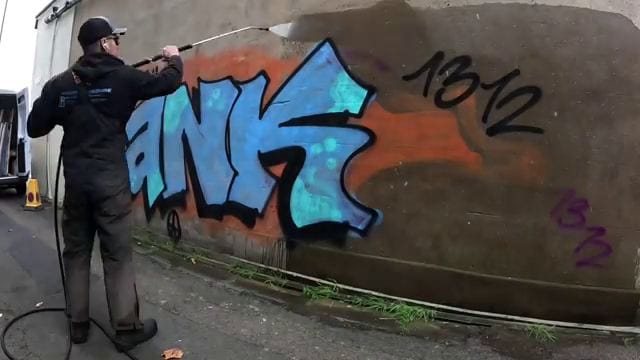
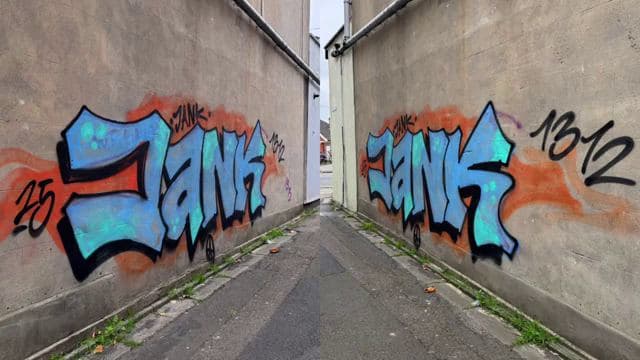
Graffiti removal is more than simply pressure washing paint from a wall. Spray paint and markers can behave very differently depending on whether they are applied to concrete, brick, painted surfaces, metal, glass, pavers, stucco, or other materials.
A professional cleaning approach starts by identifying the substrate and the type and condition of the graffiti. The removal process can then be adjusted to lift the marking while minimizing unnecessary impact on the underlying surface.
For Jacksonville property owners, this is especially important on exterior masonry and concrete where aggressive cleaning can alter the appearance or texture of the material.
Graffiti removal is the controlled cleaning or treatment of unwanted paint, marker, ink, and similar markings from a property surface.
The objective is not simply to make the graffiti less visible. The goal is to remove as much of the marking as the substrate safely allows while preserving the original material or finish.
Graffiti behaves differently on different surfaces.
On a relatively smooth, non-porous surface, paint may remain primarily on the surface. On porous materials such as unsealed brick and concrete, pigments and binders can penetrate into pores, joints, pits, and surface irregularities.
That is why a method that works on metal or glass may be unsuitable for brick or concrete.
The age of the graffiti can affect the cleaning process. Fresh markings may be easier to remove before they have weathered and become more firmly embedded in a porous substrate.
If graffiti appears on your property, documenting the affected area and arranging an assessment promptly can help determine the appropriate cleaning approach.
Graffiti can change the appearance of a property immediately. For commercial buildings, storefronts, offices, apartment communities, and other public-facing properties, visible vandalism can also create an ongoing maintenance concern.
Removing graffiti promptly can help:
Fast removal is particularly useful when the affected surface is porous. Graffiti can penetrate masonry, making complete removal more difficult as the marking ages.
Property managers may have to deal with graffiti on multiple buildings, common areas, parking structures, walls, walkways, or other shared property.
A professional assessment can help determine:
Graffiti may involve more than conventional spray paint. The material used, the number of layers, and the age of the marking can all influence the cleaning process.
Common graffiti materials include:
Spray paint is one of the most common forms of exterior graffiti. On smooth surfaces it may be relatively straightforward to remove, while porous concrete and brick can retain pigment below the visible surface.
Paint overspray can occur during construction, maintenance, repainting, or vandalism. The correct treatment depends on the overspray material and the surface underneath it.
Removing the visible paint does not always mean every trace of pigment will disappear. Porous materials can retain a shadow or discoloration after the bulk of the graffiti has been removed.
The substrate is one of the most important factors in graffiti removal.
| Surface | Common Graffiti Problem | Cleaning Consideration |
|---|---|---|
| Concrete | Spray paint, marker, pigment penetration | May require chemical treatment combined with controlled rinsing |
| Brick | Paint absorbed into pores and mortar | Requires careful surface-specific treatment |
| Masonry | Pigment retained in textured or porous areas | Gentle, controlled methods are important |
| Pavers | Paint in joints and textured surfaces | Method should account for paver material and joint condition |
| Stucco | Paint bonded to textured finish | Excessive pressure can damage the finish |
| Painted walls | Graffiti over existing coating | Removal must avoid unnecessarily stripping the underlying paint |
| Metal | Paint sitting on a relatively smooth substrate | Cleaner selection should account for the existing finish |
| Glass | Surface-level paint or marker | Cleaning must avoid scratching or damaging the glass |
| Pavement | Paint on concrete or asphalt | Surface condition and coating type affect removal method |
Concrete is porous, so spray paint can penetrate beyond the immediately visible surface.
That means “pressure wash it harder” is not necessarily the correct solution. Excessive pressure can damage concrete while still leaving pigment behind.
A suitable approach may combine a graffiti-specific treatment with controlled mechanical cleaning and rinsing, depending on the surface. Routine concrete cleaning is a separate service.
Brick requires particular care because its porosity varies and the visible face can be damaged by overly aggressive cleaning.
The goal is to remove the graffiti without unnecessarily eroding the brick face, damaging mortar, or spreading pigment deeper into the masonry.
Walls may contain concrete, brick, stucco, painted masonry, block, metal, or another substrate. The cleaning method should therefore be selected based on the actual wall material rather than simply treating every wall with the same pressure.
A professional graffiti removal project should begin with surface assessment rather than immediate high-pressure cleaning.
The surface is evaluated for material and finish, porosity, existing coatings, graffiti type, number of layers, age and condition of the graffiti, existing cracks, deterioration or loose material, and nearby surfaces that require protection.
The cleaning approach may involve water, detergent, a graffiti-removal product, controlled pressure, agitation, or a combination of methods. The appropriate method depends on the substrate and the graffiti.
A small test area can help determine whether the selected method is compatible with the surface before treating the entire affected section. This is particularly important for older masonry, painted surfaces, delicate finishes, and materials where color or texture could change.
Where appropriate, a graffiti-removal treatment is applied to break down or release the paint. The product, concentration, dwell time, and application method should follow the requirements of the selected product and the condition of the substrate.
Mechanical action may be used to help release the softened paint. Depending on the surface, this can involve controlled brushing, low-pressure washing, or another appropriate technique.
The surface is rinsed and inspected to determine whether additional treatment is needed. Deeply absorbed pigment may require multiple treatment cycles, and some porous materials may retain a degree of discoloration even after substantial graffiti removal.
If the location has experienced repeated graffiti, an anti-graffiti coating may be worth considering after the surface has been properly cleaned and prepared.
Pressure washing can be part of graffiti removal, but graffiti removal should not be treated as ordinary pressure washing.
| Factor | Standard Pressure Washing | Graffiti Removal |
|---|---|---|
| Primary objective | Remove dirt, grime, and exterior buildup | Remove paint, marker, and vandalism |
| Surface assessment | Important | Critical |
| Chemical treatment | May be used | Often depends on graffiti and substrate |
| Pressure | Selected for surface | Selected for both surface and paint removal |
| Porous masonry | Requires care | Requires particularly careful treatment |
| Shadowing | Usually not a major concern | May remain after paint removal |
| Test area | Useful | Especially important |
| Post-treatment | May not be necessary | May include neutralization, further cleaning, or protection |
Sometimes, but not always. Pressure washing can help remove graffiti from some surfaces, but pressure alone may be ineffective against deeply absorbed pigment and can damage masonry or coatings if used too aggressively.
For porous concrete and brick, a combination of the appropriate treatment and controlled rinsing may produce a better result than simply increasing water pressure. Professional preservation guidance recommends using the least aggressive effective approach and testing the surface before full-scale cleaning.
Graffiti cleanup can involve several different surface conditions.
| Problem | Common Cause | Cleaning Consideration |
|---|---|---|
| Fresh spray paint | Recent vandalism | May be easier to address before deeper penetration |
| Old spray paint | Weathered graffiti | May require repeated or specialized treatment |
| Paint overspray | Painting or vandalism | Treatment depends on paint and substrate |
| Marker tags | Permanent marker or paint marker | Requires substrate-appropriate cleaning |
| Graffiti shadow | Residual pigment in porous material | May require additional treatment and realistic expectations |
| Paint residue | Partially removed graffiti | Further cleaning may be necessary |
| Multiple paint layers | Repeated vandalism | Can require staged removal |
| Surface discoloration | Pigment or chemical interaction | May remain even after paint removal |
Graffiti ghosting, also called graffiti shadowing, is the visible residue or discoloration that can remain after the main paint layer has been removed.
It is particularly associated with porous materials because pigment can penetrate into the substrate.
Complete removal is not always possible without risking damage to the underlying material. The condition of the substrate and the type of graffiti determine how much can safely be removed.
Graffiti can affect residential walls, fences, driveways, retaining walls, garages, concrete surfaces, and other exterior areas.
A residential graffiti removal assessment should consider the surrounding finish as carefully as the graffiti itself.
Depending on the property, graffiti may appear on:
If the graffiti is on a painted surface, removal may require a different strategy than cleaning unpainted masonry. For general flatwork maintenance, see driveway and concrete cleaning.
Commercial properties often need graffiti addressed without unnecessarily disrupting customers, tenants, employees, or normal property operations.
Commercial graffiti removal can apply to:
A visible tag on a storefront, entrance, wall, or parking area can become an obvious property-maintenance issue.
The cleaning plan should account for the surface, access, operating environment, surrounding property, and the need to protect adjacent materials. Broader exterior work is handled through our commercial pressure washing service.
For communities and multi-property portfolios, graffiti cleanup may involve recurring maintenance rather than a single isolated incident.
A property manager may benefit from documenting:
This information can make future treatment and maintenance planning more consistent.
Jacksonville properties commonly include concrete driveways, sidewalks, masonry walls, brick features, pavers, stucco, painted exterior surfaces, and commercial concrete areas.
The local climate also means exterior surfaces are regularly exposed to heat, rainfall, humidity, organic growth, and general outdoor soiling.
That matters because graffiti removal may be performed on a surface that already has dirt, mildew, algae, weathering, oxidation, or other buildup.
The safest approach is not automatically the lowest pressure or the highest pressure.
Instead, the cleaning method should be matched to: graffiti material + substrate + surface condition + desired result.
For masonry, recognized preservation guidance recommends starting with the gentlest effective method and increasing aggressiveness only when necessary.
A successful graffiti removal job should address both sides of the problem: remove the unwanted marking while preserving the underlying surface.
High pressure can cause damage to certain masonry surfaces, coatings, mortar joints, or deteriorated materials.
It can also fail to address pigment that has penetrated into porous material.
The objective should therefore be controlled cleaning rather than maximum pressure.
Graffiti treatment may involve cleaning products and rinse water. Adjacent windows, doors, painted finishes, landscaping, fixtures, vehicles, and other surfaces should be considered during the cleaning process.
For sensitive or historic masonry, the National Park Service specifically recommends evaluating the substrate and using the least aggressive effective technique.
Graffiti removal can generate water containing paint residue and cleaning products. The collection, handling, and disposal of rinse water should be managed according to applicable requirements for the property and location.
For properties that experience repeated vandalism, cleaning alone may not be the entire solution.
An anti-graffiti coating can create a more cleanable surface by reducing the interaction between future graffiti and the underlying substrate.
A suitable coating can make future graffiti removal easier on certain concrete surfaces, but compatibility depends on the concrete's condition, finish, moisture, and the coating system being considered.
Brick requires careful product selection because coatings can affect the appearance and moisture behavior of masonry.
A coating should not be treated as a universal solution for every brick surface.
It may be worth discussing when:
Some graffiti-resistant systems are designed specifically to make future markings easier to remove.
Property managers often need a practical response to vandalism that protects the appearance of the property without turning every incident into a major restoration project.
A graffiti removal service can be evaluated around:
For multi-family communities, commercial properties, retail centers, and managed facilities, it may also make sense to identify frequently targeted areas and evaluate whether protective coatings or other maintenance measures are appropriate.
Graffiti removal is available for properties in Jacksonville, Florida and the surrounding service area supported by the business.
Within Jacksonville, service requests may involve residential or commercial properties in areas such as:
Availability outside Jacksonville and throughout Northeast Florida should be confirmed based on the property address.
Professional graffiti cleanup can provide several practical benefits.
Removing visible vandalism can return attention to the building, storefront, wall, or other intended surface rather than the graffiti.
Matching the cleaning method to the substrate can help avoid using more aggressive treatment than the surface can tolerate.
Concrete, brick, and masonry can require more than ordinary surface washing because paint may penetrate below the visible surface.
For properties repeatedly targeted by graffiti, removal can be combined with a discussion about protective coatings or other prevention strategies.
Clean exterior surfaces are particularly important around entrances, storefronts, customer areas, and other highly visible commercial locations.
There is no single price that accurately applies to every graffiti removal project.
The cost depends on the specific property and cleaning requirements.
Common factors include:
A property assessment or clear photographs can help determine what type of treatment may be appropriate before a quote is prepared.
Graffiti should generally be addressed as soon as reasonably practical after it is discovered, especially when the marking is on a porous surface.
There is no universal graffiti-removal schedule because the need is driven by vandalism incidents rather than normal surface deterioration.
For properties with repeated incidents, a maintenance strategy can include:
The GSA notes that graffiti is generally easier to remove when it is fresh, making timely response an important consideration.
A professional graffiti removal visit should focus on the condition of the actual property rather than treating every graffiti incident identically.
The affected area is evaluated to identify:
The selected treatment is applied and the graffiti is removed using a method appropriate for the substrate.
The process may require more than one treatment cycle, particularly when paint has penetrated porous masonry.
The surface is inspected for:
If complete removal would risk damaging the substrate, the practical stopping point should be based on the condition and sensitivity of the material.
Painting over graffiti can sometimes be appropriate, particularly when the original surface is already painted and a matching coating is available.
However, painting is not automatically the best solution.
| Situation | Removal | Repainting |
|---|---|---|
| Unpainted brick | Often preferred | May alter original appearance |
| Unpainted concrete | Often preferred | May change surface appearance |
| Painted wall | May be appropriate | Can be practical if matching paint is available |
| Repeated vandalism | Removal + protection may help | May require repeated repainting |
| Historic masonry | Requires careful assessment | May be inappropriate without preservation considerations |
The right choice depends on the existing surface, desired appearance, condition, and future maintenance plan.
The questions Jacksonville homeowners ask us most about this service, answered straight.
Call us or send a message — we will give you a straight answer, whether or not it leads to a booking.
Call NowSpray paint can be removed from concrete using a surface-appropriate combination of graffiti-removal treatment, controlled agitation, and rinsing. Because concrete is porous, the correct method depends on the paint, depth of penetration, surface condition, and desired result.
Graffiti on brick requires a method that accounts for the brick's porosity and condition. A suitable treatment may be combined with controlled mechanical cleaning and rinsing. Aggressive cleaning can damage the brick face or mortar, so the surface should be evaluated before treatment.
Pressure washing can remove some graffiti, but pressure alone is not always sufficient. Porous surfaces may require a specialized treatment before controlled rinsing, and excessive pressure can damage certain substrates.
It can often be removed successfully without unnecessary concrete damage when the method is selected according to the surface and graffiti. However, results vary, and deeply absorbed pigment or pre-existing deterioration can limit how completely a marking can be removed.
Graffiti can often be treated on brick, but brick requires particular care because it is porous and can be sensitive to aggressive cleaning. Testing and using the least aggressive effective method can help reduce the risk of damage.
Graffiti shadowing occurs when pigment or residue remains in the pores or texture of the substrate after the visible paint layer has been removed. Porous masonry is particularly susceptible to this problem.
Old graffiti can often be treated, but older markings may be more difficult to remove, particularly when the paint has weathered or penetrated porous material. The age of the graffiti is one factor considered when selecting the treatment.
Depending on the material and condition, graffiti may be treated on concrete, brick, masonry, pavers, stucco, painted surfaces, metal, glass, pavement, walls, and other exterior surfaces.
No. Pressure washing is one possible component of a graffiti removal process, but graffiti removal may also involve substrate assessment, specialized cleaning products, controlled agitation, careful rinsing, and post-treatment.
There is no single method that is best for every concrete surface. The appropriate approach depends on the graffiti material, age, concrete condition, porosity, and whether the surface has an existing coating.
The best method is the least aggressive approach that effectively removes the graffiti without unnecessarily damaging the brick or mortar. A test area is particularly useful before treating a larger section.
Anti-graffiti coatings do not necessarily prevent someone from applying graffiti. Their purpose is generally to make future graffiti easier to remove and reduce interaction between the marking and the underlying substrate.
Pricing depends on the size of the affected area, substrate, graffiti type, condition, accessibility, treatment requirements, and whether multiple surfaces need cleaning. An accurate price requires project-specific information.
Graffiti should generally be addressed promptly after discovery. Fresh graffiti can be easier to remove than older markings, particularly on porous surfaces.
Graffiti removal can be performed for commercial applications such as storefronts, offices, apartment properties, retail buildings, parking areas, walls, and other exterior surfaces, subject to the property's specific requirements.
If graffiti requires urgent attention, contact the cleaning company as soon as possible to discuss the location and required response.
Sometimes. The cleaning process must account for the existing paint because an aggressive graffiti remover may also affect the original coating. In some situations, repainting may be more appropriate.
Graffiti rarely appears on a surface that needs nothing else. These services are often booked for the same property.
Targeted treatment for the stains ordinary washing leaves behind: irrigation rust, oil and grease spots, and adhered gum, each of which needs a different product.
Rust and stain removal →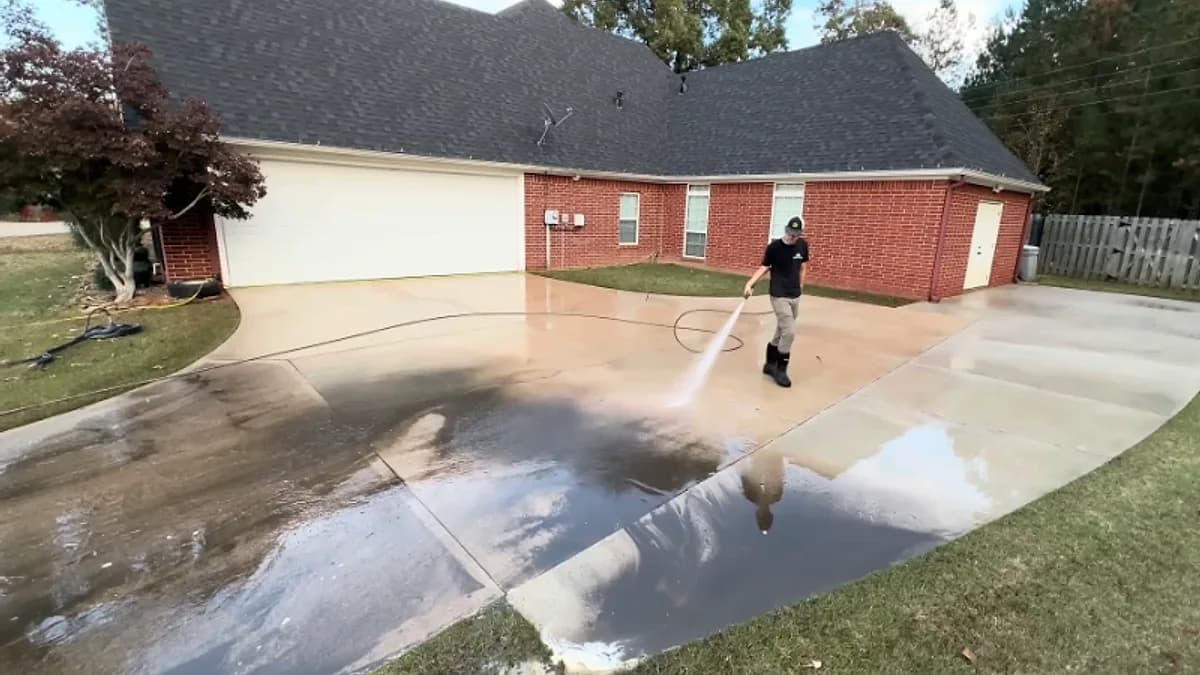
Driveways, sidewalks, walkways, garage floors and entryways cleaned with a surface cleaner for an even finish, then post-treated.
Driveway and concrete cleaning →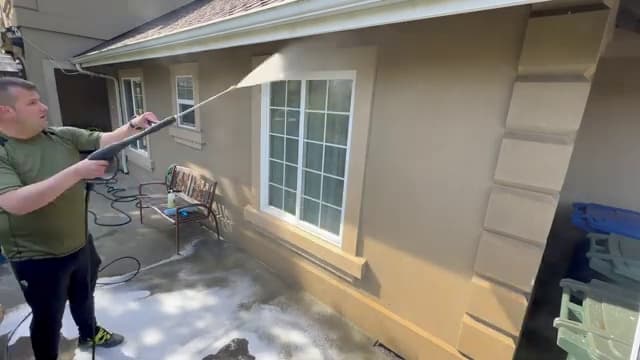
Low-pressure cleaning for vinyl, stucco, brick, fiber cement and painted wood, including soffit, fascia and gutter exteriors.
House washing in Jacksonville →Graffiti does not have to become a permanent part of your building, wall, pavement, or other exterior surface.
Professional graffiti removal starts with identifying what was applied, what it was applied to, and how aggressively the surface can safely be cleaned. That is especially important for porous concrete, brick, masonry, and painted surfaces where improper treatment can create a second problem while trying to solve the first.
If your Jacksonville property has spray paint, tagging, paint overspray, or other vandalism, request an assessment to determine the appropriate removal approach. Call (904) 938-8585 about graffiti cleanup.
Call Now