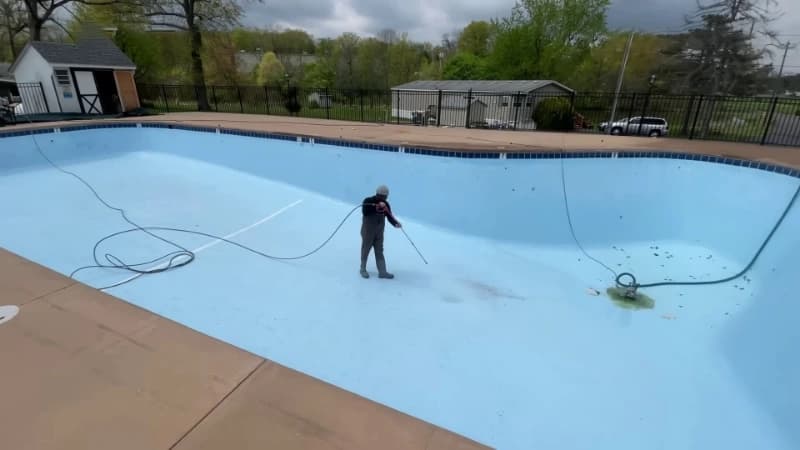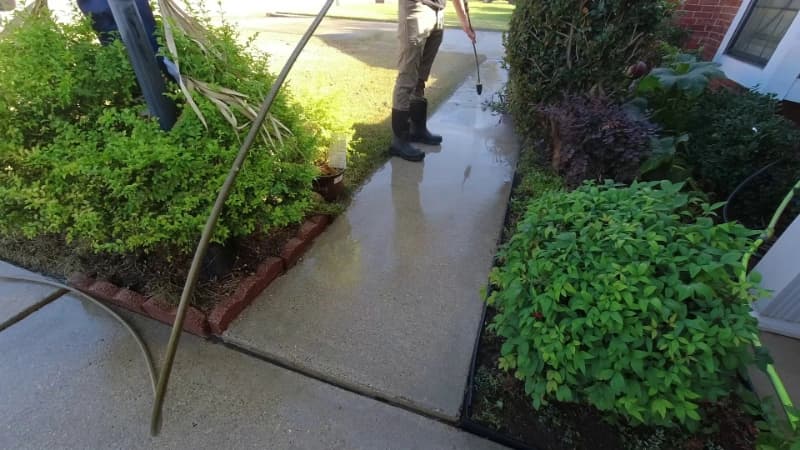
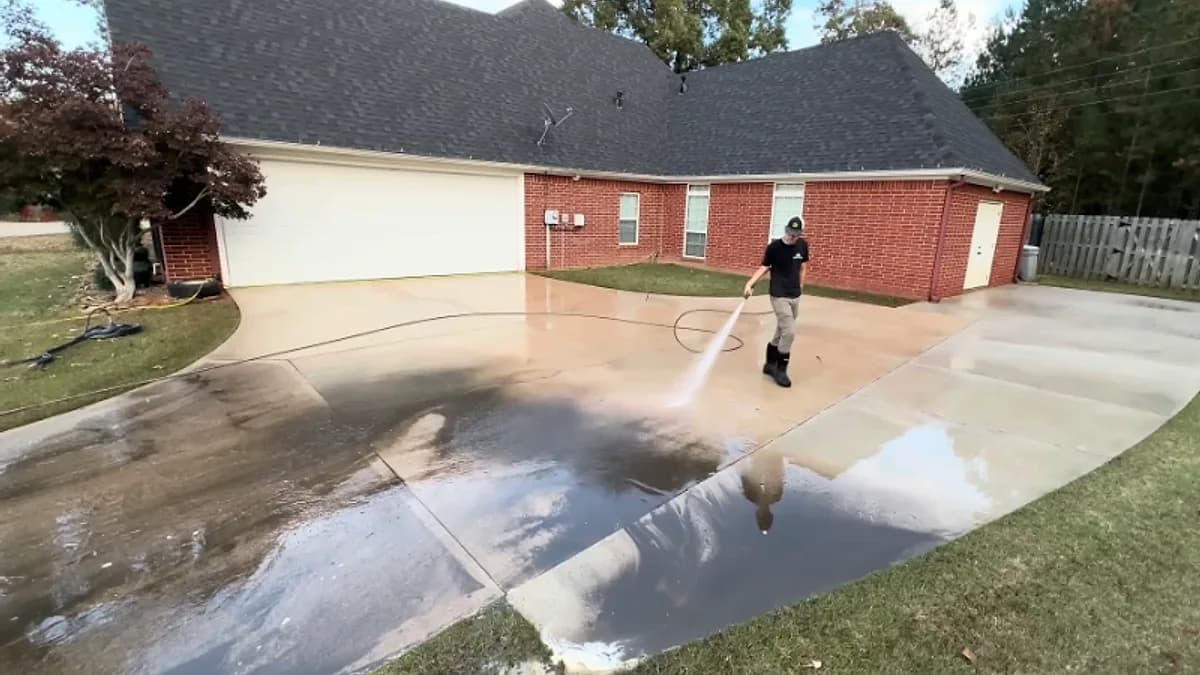
Driveway & Concrete Cleaning
Driveways, sidewalks, walkways, garage floors and entryways cleaned with a surface cleaner for an even finish, then post-treated.
Driveway and concrete cleaning →Jacksonville's humidity, shade, and heavy seasonal rain wear pavers down fast — dirt and algae build up, joint sand washes out, and sealer fades under the sun. Paver cleaning, re-sanding, and sealing in Jacksonville, FL addresses all three at once, restoring the surface and protecting it against the next round of weather. If your driveway, patio, walkway, or pool deck needs attention, request a free quote below and get a straight answer on what it'll take.
This page covers paver cleaning, re-sanding, and sealing specifically. For a full look at everything offered in the area, see pressure cleaning services in Jacksonville.
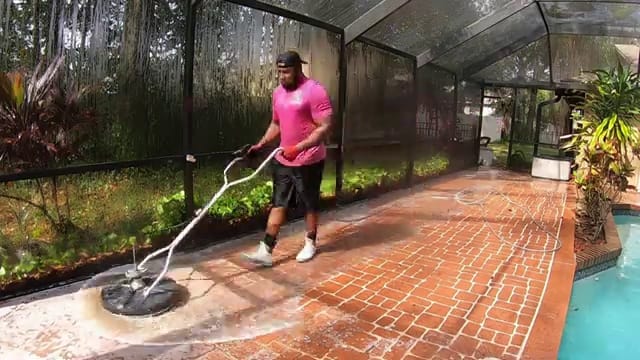
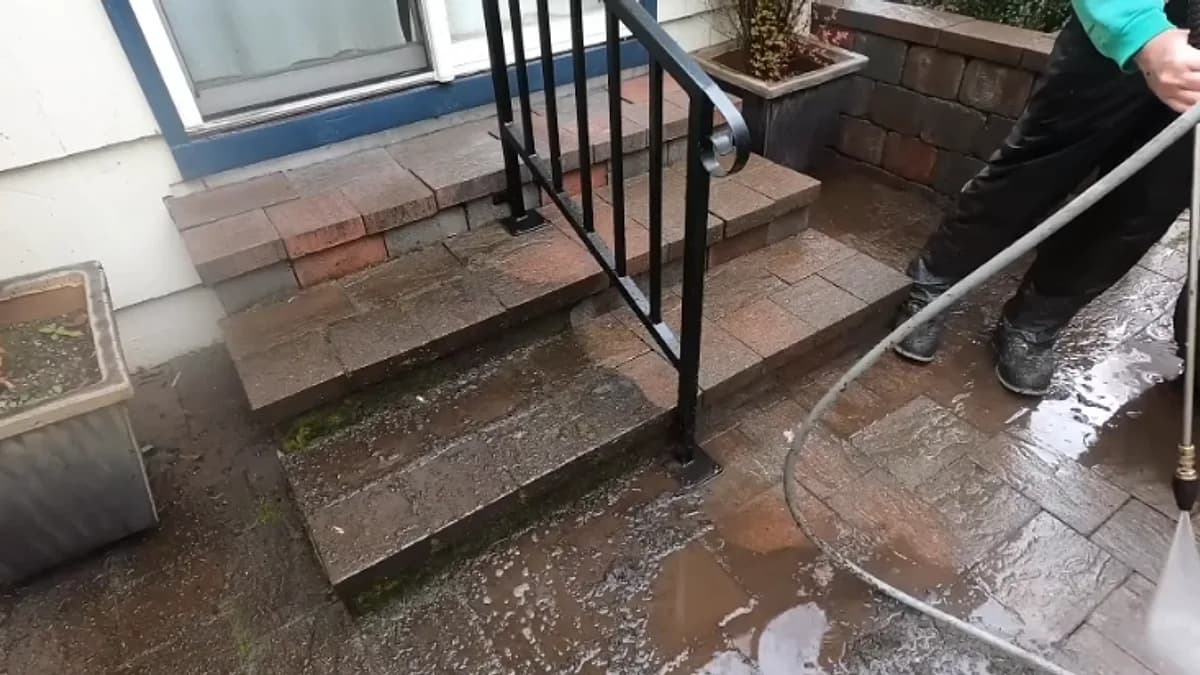
Not every paver problem calls for the same fix. Use this as a quick gut-check before requesting a quote:
If you're not sure which category your pavers fall into, that's normal — request a quote and mention what you're seeing, and the right combination of services can be sorted out from there.
Before any sealer goes down, the pavers have to be clean — genuinely clean, not just rinsed off. Dirt, algae, and organic buildup sit in the texture of the paver surface and in the joints, and if that gets sealed in, it's stuck there. That's one of the most common mistakes homeowners run into when they try to handle this themselves or hire someone who skips straight to sealing.
In Jacksonville, the main things that typically need to be removed include:
Efflorescence in particular is worth mentioning because it's often confused with a cleaning problem when it's really a moisture issue working its way out of the paver. It usually needs a different cleaning approach than surface dirt, and sealing over it without addressing it first tends to trap the problem rather than fix it.
Proper cleaning matters because sealer is a topcoat — it locks in whatever is underneath it. A clean, dry surface is what lets the sealer bond properly and actually look good once it's applied.
Why Jacksonville's climate makes this a recurring issue: Humidity and shade are a big part of why algae and organic growth show up as often as they do on local patios and walkways, especially in areas that don't get much direct sun. That's not a one-time cleanup — it's an ongoing condition of the climate here, which is part of why cleaning tends to come up again every year or two rather than being a single fix.
Once the pavers are clean, the next thing to check is the joint sand — the material between each individual paver that keeps them locked together.
Over time, that sand washes out from rain, gets displaced by foot and vehicle traffic, or simply erodes with age. When the joints are empty or running shallow, a few things start happening:
Re-sanding means filling those joints back in with new material. For most Jacksonville projects, polymeric sand is the better option over standard joint sand. Polymeric sand contains binding agents that harden once it's watered in, which helps it resist washout and slows down weed growth in the joints compared to loose, regular sand. It's not indestructible, but it holds up noticeably longer under Florida rain than untreated sand does.
The joints need to be properly cleaned out and prepped before new sand goes in — packing sand into joints that are still dirty, mossy, or wet doesn't give it anything solid to bond to. This step is also why re-sanding almost always happens after cleaning and before sealing, not as a stand-alone fix.
Jacksonville's heavier rain events play a direct role here, too. Sand washout tends to happen faster after a summer of regular downpours than it would in a drier climate, which is a big reason re-sanding comes up as often as it does on local driveways and patios.
Re-sanding fixes joint sand loss — it doesn't fix settling, sinking, or an uneven base underneath the pavers. If sections of a driveway or patio have sunk, heaved, or gone visibly uneven, that's a base or sub-grade issue, and packing new sand into those joints won't correct it. Badly unstable or uneven pavers typically need leveling or repair work done first, before re-sanding and sealing make sense.
Sealing is the step that pulls everything together. Once the pavers are clean and the joints are re-sanded, a sealer gets applied to the surface to help protect the work that's already been done and improve how the pavers look.
A good sealer application can:
There are a couple of finish options worth understanding before you decide what you want:
Wet-look sealer darkens the pavers and adds a glossy sheen, similar to how they look right after a rain. It tends to make colors pop more and gives driveways and patios a noticeably richer appearance.
Matte or natural-look sealer protects the surface without changing its look much. It's a common choice for homeowners who want the protective benefits of sealing without the shine.
Neither option is objectively "better" — it comes down to the look you're going for and the type of paver you're working with. What does matter is sequencing: sealer applied over dirty pavers or unfilled joints doesn't hold up, and it usually shows every flaw underneath it within a season or two.
Sun and weather exposure are the main reason sealing gets recommended in the first place. Jacksonville pavers see a lot of UV exposure and seasonal rain, and that combination is what drives the fading and dulling that sealing is meant to address.
The right sealer isn't universal — it depends on the paver material, the current surface condition, whether there's an existing coating already on the pavers, and the finish you want. Concrete pavers, brick pavers, and natural stone like travertine don't all take sealer the same way: travertine's porosity generally calls for a formulation suited to natural stone, brick can need different prep due to efflorescence, and a surface with old, failing sealer usually needs that coating addressed before a new layer goes on. Matching the sealer to the material is part of what determines how the finished job actually looks and holds up.
This service covers the paver types found across most Jacksonville driveways, patios, and outdoor living areas, including:
Not every material gets treated exactly the same way. Travertine, for example, is more porous than concrete and generally calls for a different sealer formulation. Brick can be more prone to efflorescence than concrete. Part of the inspection process is figuring out what your specific pavers need rather than applying a one-size-fits-all approach. For pavers next to a pool, pool deck and patio services cover some of the surrounding surfaces that often get addressed alongside a paver sealing job.
Not sure if your pavers actually need service, or if it's just cosmetic? Here are the signs that usually mean it's time:
If you're noticing two or three of these at once, that's usually a sign the pavers need more than a quick rinse — cleaning, re-sanding, and sealing together tend to address the underlying issue rather than just the surface symptom.
There's no flat, one-size-fits-all price for this kind of work, and any company that quotes you sight unseen is guessing. Cost depends on a handful of factors specific to your property:
The most accurate way to get a number is to have your property looked at. Request a quote for a straight answer based on what your driveway, patio, or pool deck actually needs, or check the pricing page for how estimates are put together.
Sealing isn't just spraying a product onto pavers and calling it done. It's the last step in a sequence, and skipping steps or rushing the order is the most common reason a sealing job doesn't hold up.
The order matters for a practical reason: cleaning removes dirt, algae, and staining that would otherwise get sealed underneath the coating. Drying time lets moisture escape the pavers and the base material so the sealer can bond correctly instead of trapping moisture beneath it. Re-sanding fills the joints so the sealer has something solid to lock in place, rather than sealing over gaps that will just wash out later. And the sealer itself needs to match the paver type and the finish you're after, applied at the right thickness and coverage.
Skip any one of those steps, and the results usually show up fast — patchy color, sealer that peels or flakes, joint sand that keeps washing away, or a surface that traps moisture instead of shedding it. Preparation is what makes the sealing step actually worth doing.
Every property is a little different, but the general process for paver cleaning, re-sanding, and sealing in Jacksonville generally follows this order: This is a general outline of how the work typically comes together — the exact approach can shift depending on the paver type, the current condition of the surface, and what the property actually needs.
The current condition gets assessed — staining, efflorescence, joint sand loss, existing sealer, and overall wear — to figure out what the job actually needs.
Furniture, planters, and anything else in the way gets moved, and surrounding landscaping is protected as needed.
The pavers get cleaned to remove dirt, algae, staining, and buildup so the surface is ready for the next steps.
Pavers need to dry out sufficiently before sand and sealer go down — applying either to a damp surface causes problems down the line.
New joint sand, typically polymeric, gets worked into the joints and activated according to the product's requirements.
Once the surface and joints are ready, sealer is applied evenly across the pavers.
The finished area gets checked for coverage, joint fill, and overall appearance before the job is considered complete.
The questions Jacksonville homeowners ask us most about this service, answered straight.
Call us or send a message — we will give you a straight answer, whether or not it leads to a booking.
Call NowIt depends on the sealer product used, how much sun and rain exposure the area gets, and how much traffic the surface sees. Pool decks and driveways tend to wear faster than shaded walkways. Rather than a fixed number, it's better to watch for fading, water no longer beading on the surface, or visible wear, and have the pavers reassessed at that point.
Yes. Sealing over dirt, algae, or staining traps that material under the coating, which usually leads to a patchy or discolored result. A properly cleaned and dried surface gives the sealer something solid to bond to.
In most cases, yes, especially if the joints are low, empty, or the pavers haven't been serviced in a while. Sealing over damaged or missing joint sand doesn't fix the underlying issue and can make it harder to correct later.
Polymeric sand is a joint sand mixed with binding agents that harden once activated with water. It's generally more resistant to washout and helps reduce weed growth in the joints compared to plain, untreated sand, though it still requires proper installation and occasional maintenance.
Wet-look sealer adds a glossy sheen and darkens the pavers, giving colors a richer, "just-rained" appearance. Matte sealer protects the surface without significantly changing its look. The right choice comes down to personal preference and, in some cases, the paver material itself.
Efflorescence can typically be treated during the cleaning process, though it often requires a different approach than general dirt or algae removal since it's a mineral deposit rather than surface grime. In some cases it can return over time if moisture continues moving through the paver or base material.
Sealing paired with properly installed joint sand — particularly polymeric sand — can make it harder for weeds to establish themselves in the joints compared to bare, unsealed pavers with loose sand. It reduces the problem rather than eliminating it entirely, since seeds can still land and take root over time.
Cost varies based on square footage, paver condition, joint-sand condition, and the sealer chosen, among other factors. The most reliable way to get an accurate number is to request a quote based on your specific property.
We cover all of Jacksonville and Duval County, from the historic districts to the beaches. If your neighborhood is not listed, it is still worth asking.
More on this service in paver cleaning and sealing in St. Johns.
Not sure if we reach you? Get in touch and we will tell you straight away.
Bundling services into one visit saves you a second call-out and usually costs less overall.
Driveways, sidewalks, walkways, garage floors and entryways cleaned with a surface cleaner for an even finish, then post-treated.
Driveway and concrete cleaning →
Pavers, travertine, coated concrete and stamped surfaces, cleaned at a pressure that protects the finish and the texture underfoot.
Pool deck cleaning →
Pressure-treated wood, composite decking, vinyl and wood fencing, each at its own pressure.
Deck and fence cleaning →If your driveway, patio, walkway, or pool deck is looking faded, losing joint sand, or dealing with algae and staining, request a quote to find out what it actually needs. When you reach out, it helps to mention:
Any visible stains, dirt, or algae Missing or low joint sand Fading, dullness, or areas where water no longer beads Weeds or grass growing between the pavers Whether the pavers already have a sealer on them The type of paver (brick, concrete, or travertine) if you know it
That's enough detail to get an accurate quote back without guessing.
Call Now