Pressure Washing in Orange Park and the Surrounding Area
West of the St. Johns River, the exterior cleaning conversation changes completely. Out here it is not salt. It is trees.
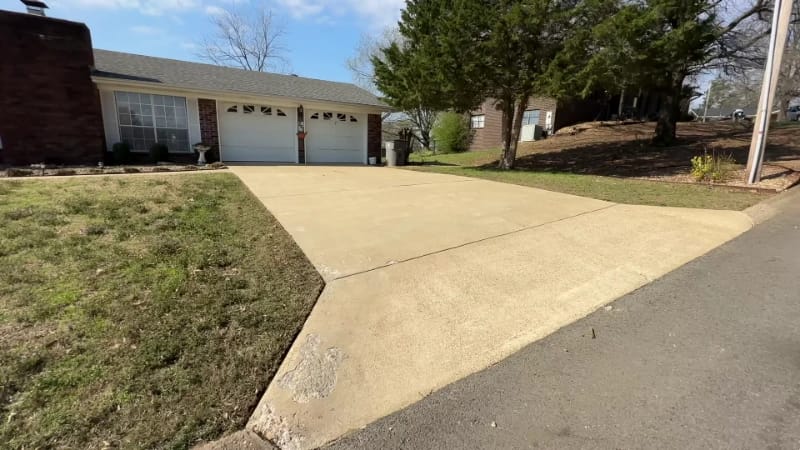
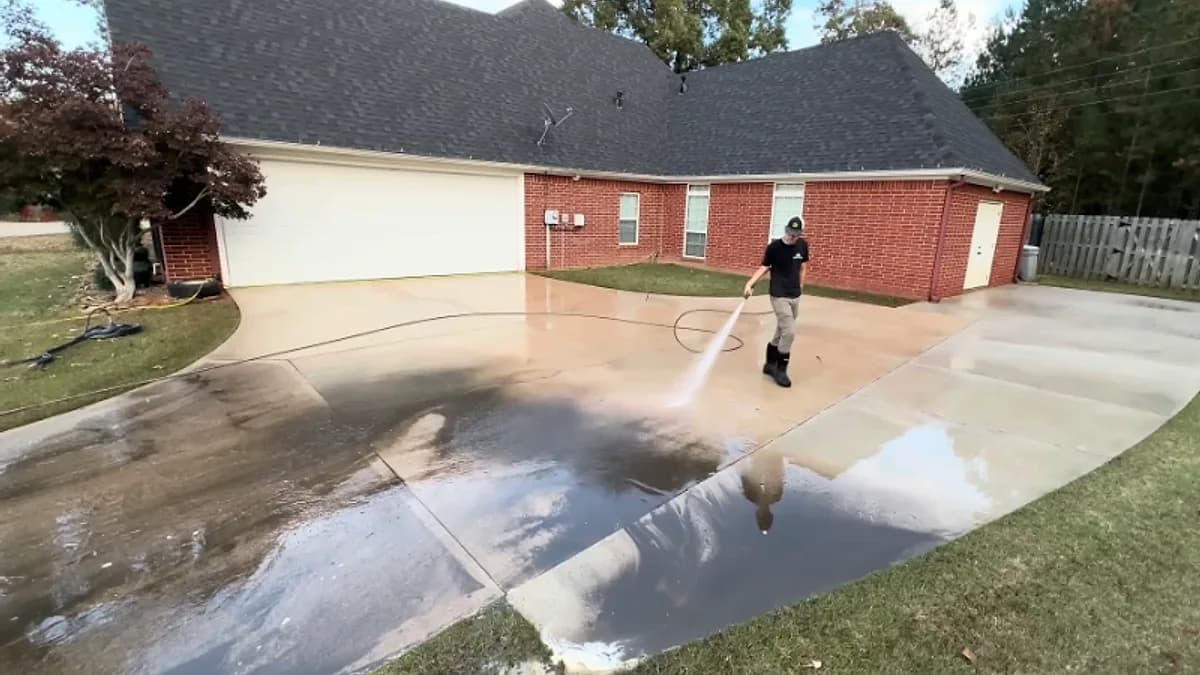
Oak and pine canopy, shade that keeps things damp for days after rain, leaves and needles in the gutters, and staining on concrete that a garden hose will never touch. Our pressure washing in Orange Park, FL is built around those problems, because they are the ones that actually show up on the estimate.
Covering Orange Park, Fleming Island, Middleburg, Oakleaf and Argyle Forest.
What Tree Cover and Water Do to a Property
Mature trees are why people move to these neighborhoods. They are also why the outside of the house needs more attention.
Heavy canopy means three things at once. Constant debris coming down on the roof and into the gutters. Less direct sun, so surfaces stay damp longer. And more organic growth on anything that stays wet.
Water is the second factor. Depending on the property, irrigation and water source can leave staining on concrete that looks nothing like ordinary dirt.
Shade, Damp and Organic Growth
Walk around your own house and look at the north side, then the south side. On a shaded property they will not match.
The shaded wall stays damp after rain, and damp surfaces grow algae and mildew. Same for a driveway under a tree versus one out in the open. The dark patches are living growth, not dirt, which is why rinsing does nothing and why a proper wash lasts.
Leaves and Debris in Gutters
Under heavy canopy, gutters fill faster. Leaves, pine needles and seed pods collect, water backs up, and the overflow runs down the fascia and siding.
Gutter cleaning here is not a once-every-few-years job the way it might be on an open lot. Properties with a lot of overhead tree cover usually need it on a regular schedule.
Orange and Rust-Colored Staining
If you have an orange or rust-colored stain on your driveway, usually in a fan shape or a streak, that is not dirt and bleach will not remove it.
Rust staining comes from iron in the water, and it needs a completely different product than the one used for algae. Irrigation overspray is a common cause, and once you know what it is, it is usually fixable.
Full treatment detail is on our rust and stain removal page.
The Heaviest Leaf Drop Here Comes in Spring, Not Fall
Most gutter advice is written for somewhere else. It tells you to clean in November, once the leaves are down. That schedule does not fit a Clay County lot, because the trees overhead do not work that way.
Live oak is evergreen, and laurel oak, which is everywhere in Orange Park and Fleming Island, is semi-evergreen. Both shed their old leaves in spring, at the same time the new ones push out. So the single heaviest load of the year lands on your roof in March and April, months after the gutters were supposedly done for the season.
Pines run on a separate clock. Slash pine needles hang on the tree for roughly one and a half to two and a half years before they are released, and that release runs from September into December. A property with both oaks and pines therefore has two debris seasons, half a year apart.
| Time of year | What comes down | What it does to the property |
|---|---|---|
| February and March | Laurel oak flowers, live oak catkins and the North Florida pine pollen peak. | Catkins mat together and block downspouts while the gutter itself still looks clear. Pollen film settles into screens, concrete and paver joints. |
| March and April | The real oak leaf drop, as the semi-evergreen oaks shed and releaf at once. This is the year's heaviest load. | Gutters fill fast and overflow down the fascia and siding, which is where the dark streaking on the boards comes from. |
| June through November | Wet season and hurricane season together, with storm debris on top of steady canopy drop. | Shaded siding, roofs and flatwork stay damp long enough for algae and mildew to establish. Growth is at its fastest here. |
| September through December | Slash pine needle drop, plus acorns. | Needles knit into a mat that holds water in gutters and roof valleys. Acorns and seed pods block outlets outright. |
The practical read: on a wooded lot out here, one clearing a year in the fall leaves the gutters loaded through the wettest months. Spring and late fall is the pairing that actually matches what is falling. Service detail is on the gutter cleaning page.
Services These Properties Need Most
Gutter Cleaning and Brightening
Two separate jobs that people often mix up. Clearing the inside of the gutter removes debris and gets water flowing again. Brightening removes the dark vertical stripes on the outside face, which are oxidation and road film, not dirt, and which a house wash alone will not lift.
Under heavy tree cover, most properties need the first one regularly. See our gutter cleaning page.
Rust and Stain Removal
Rust, oil and organic staining are three different chemistry problems and they need three different products. Getting this wrong is why so many DIY attempts leave the stain exactly where it was.
More on the rust and stain removal page.
House Washing and Soft Washing
House washing removes algae, mildew and general grime from siding, soffit and trim. On a shaded property the growth is usually heaviest on the north and east sides and around the eaves.
Siding gets soft washed, not pressure washed. High pressure forces water behind the panels. Full method on the house washing page.
Driveway and Concrete Cleaning
Shaded concrete is the surface people notice most. A driveway under trees can look years older than the same slab in full sun.
Flatwork is one of the few surfaces that genuinely takes pressure, cleaned with a surface cleaner for an even finish rather than a wand, which leaves stripes. Details on the driveway and concrete page.
Reading the Stain Before Choosing the Chemistry
The orange stain question comes up on nearly every Clay County estimate, and the answer starts with where the water comes from. Clay County Utility Authority draws all of its supply from the Floridan aquifer, and several of its systems, the Orange Park and Pace Fleming grids among them, are aerated before distribution, which is how dissolved iron is dealt with.
Irrigation is a different story. A private well on a larger Middleburg or Lake Asbury lot delivers aquifer water straight to the sprinkler heads with none of that treatment. The federal secondary standard for iron in drinking water is 0.3 milligrams per liter, and it exists for staining rather than for health. Water above that line will mark concrete, and irrigation water is not held to it at all.
That is why the tell is the shape. A rust stain that arrives as a fan or an arc is tracing the throw pattern of a rotor or spray head, which means the source is the water, not something spilled. Once you can name the stain you can pick the product, and the products are not interchangeable.
| What you are looking at | What it actually is | What removes it |
|---|---|---|
| Orange or rust-colored fan, arc or streak on concrete | Iron oxide left behind as irrigation water evaporates off the slab. | An acid-based rust remover. Sodium hypochlorite does nothing to it, and pressure alone will not shift it. |
| Dark green or black patching, worst on the shaded side | Living algae and mildew, not dirt, which is why it returns to the same places. | A cleaning solution given proper dwell time, then a rinse. A post-treatment slows how fast it re-establishes. |
| Dark vertical stripes down the outside face of the gutter | Oxidation and road film bonded into the finish. It is not what is inside the gutter. | A dedicated gutter brightener applied to the face. A house wash passes straight over it. |
| Dark gray or black patch spreading under where a vehicle parks | Oil that has soaked into the pores of the concrete rather than sitting on top. | A degreaser with heat, drawn back out of the slab. Blasting it only pushes it deeper. |
If you cannot tell which of these you have, a photo settles it faster than a description does. Getting the identification right is most of the job, because the wrong product on the wrong stain either does nothing or etches the surface.
Areas We Cover
Orange Park
The main service area for this page. Orange Park sits in Clay County along the west bank of the St. Johns River, with a mix of established neighborhoods and newer development, so no two streets need quite the same thing.
If you are anywhere near Blanding Boulevard, Wells Road or Kingsley Avenue, you are in our regular working area.
Fleming Island
Fleming Island runs south of Orange Park along the river, also in Clay County. Same general conditions, and the properties closer to the water tend to have heavier tree cover.
Middleburg
Middleburg sits farther west in Clay County. Lots out this way are often larger with more surrounding vegetation, which usually means more debris load on the roof and gutters and more shade on the driveway.
Oakleaf
Oakleaf is a planned community in the Clay County area, and Clay County includes it alongside Orange Park and Fleming Island in its own community mapping. Housing here is generally newer than central Orange Park, so the surface mix on a given property can be different.
Argyle Forest
Argyle Forest is part of southwest Jacksonville in Duval County, not Clay County, sitting just north of Orange Park. It is close enough to Orange Park to share the same service run and much of the same tree cover.
Working Around Mature Trees and Established Landscaping
On a property with established landscaping, protecting what is growing matters as much as cleaning what is not.
Before anything goes up, beds and plants get soaked with plain water, so the first thing they take in is water rather than cleaning solution. On hot days they get covered. Outlets and exterior fixtures get taped. Everything gets rinsed down at the end.
Low branches, irrigation heads, outdoor furniture and drainage paths all get worked around. If you have something you are particularly protective of, a vegetable garden or newly laid sod, tell us before we start.
Local Cleaning for Local Properties
Whether the property is off Blanding Boulevard, out toward Middleburg, on Fleming Island or in the Oakleaf area, the address does not tell us what method to use.
The surface does.
A heavily shaded driveway needs a different treatment than a sun-exposed walkway. A gutter under mature oaks has a different debris load than one on an open lot. A rust stain and an algae stain look similar from ten feet away and need completely different products.
That is what we are looking at when we come out.
Get a Free Estimate
Tell us where the property is and what needs cleaning. If you have staining you cannot identify, a photo helps more than a description.
We will price from the actual property and put it in writing before we start.
Call or text (904) 938-8585 for a free estimate.
Call NowQuestions From Orange Park Property Owners
Still Have Questions?
Call us or send a message — we will give you a straight answer, whether or not it leads to a booking.
Call NowYes. We cover Orange Park along with Fleming Island, Middleburg, Oakleaf and Argyle Forest. Most properties here need some combination of house washing, gutter clearing and concrete cleaning.
Yes. Fleming Island is part of the same regular service area as Orange Park, along the west side of the St. Johns River.
Yes. Gutter clearing is one of the most requested services out here, mainly because of the tree cover. Properties under heavy canopy usually need it on a regular schedule rather than occasionally.
Orange or rust-colored staining is caused by iron in the water, often from irrigation overspray. It is a different problem than dirt or algae and needs an acid-based treatment rather than the standard cleaning solution. Bleach will not touch it.
Yes. Dark buildup on shaded concrete is usually algae, which is living growth rather than dirt. It responds well to the right cleaning solution followed by surface cleaning. A post-treatment afterward slows how fast it comes back.
Yes. Oakleaf is included in this service area.
Yes. Argyle Forest is part of southwest Jacksonville and sits just north of Orange Park, so it falls inside the same service run.