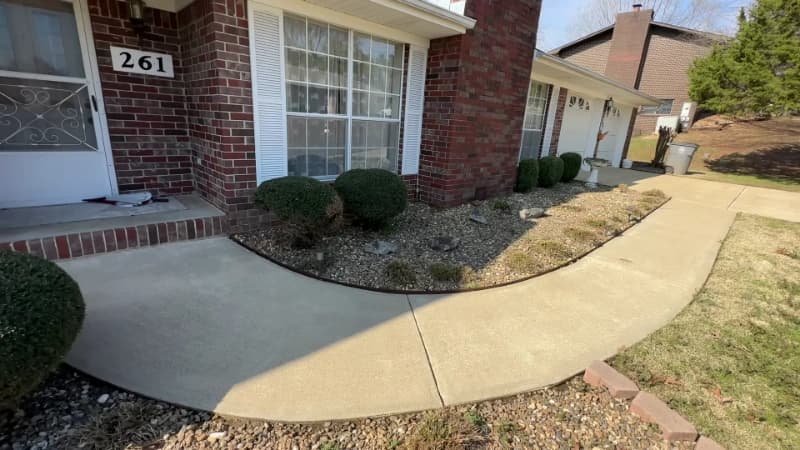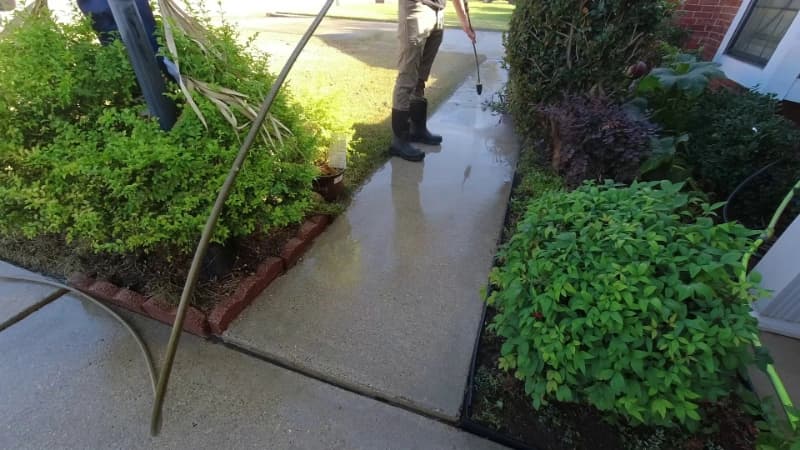
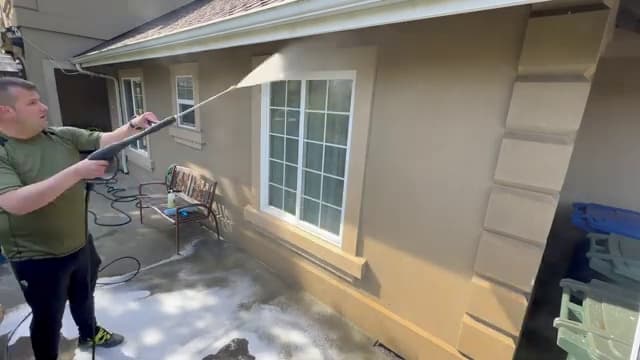
House Washing & Soft Washing
Low-pressure cleaning for vinyl, stucco, brick, fiber cement and painted wood, including soffit, fascia and gutter exteriors.
House washing in Jacksonville →Mold, mildew, algae and other organic growth can leave Jacksonville homes and commercial properties with green buildup, dark staining and a neglected appearance. Professional exterior mold, mildew and algae removal uses the appropriate cleaning method for the surface instead of relying on high pressure alone.
We clean exterior surfaces throughout Jacksonville with methods selected according to the material, condition, amount of buildup and type of growth present.
If the problem is on the outside of your property, we can help determine the appropriate exterior cleaning approach. This service is for exterior surfaces only and is not indoor mold inspection, mold testing or interior mold remediation.
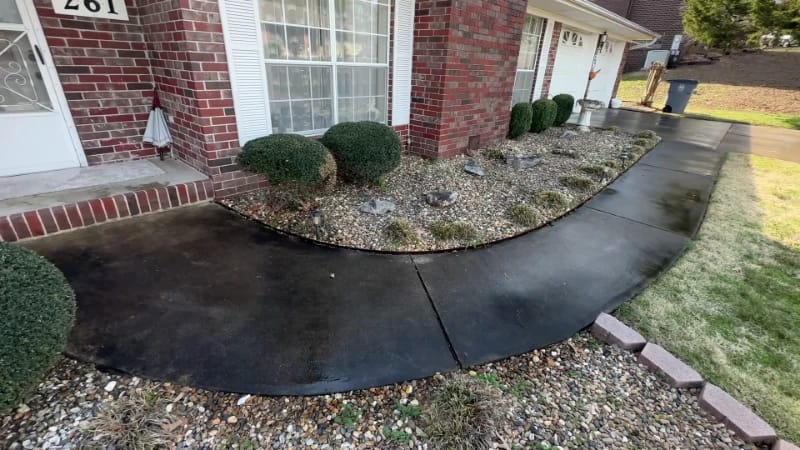
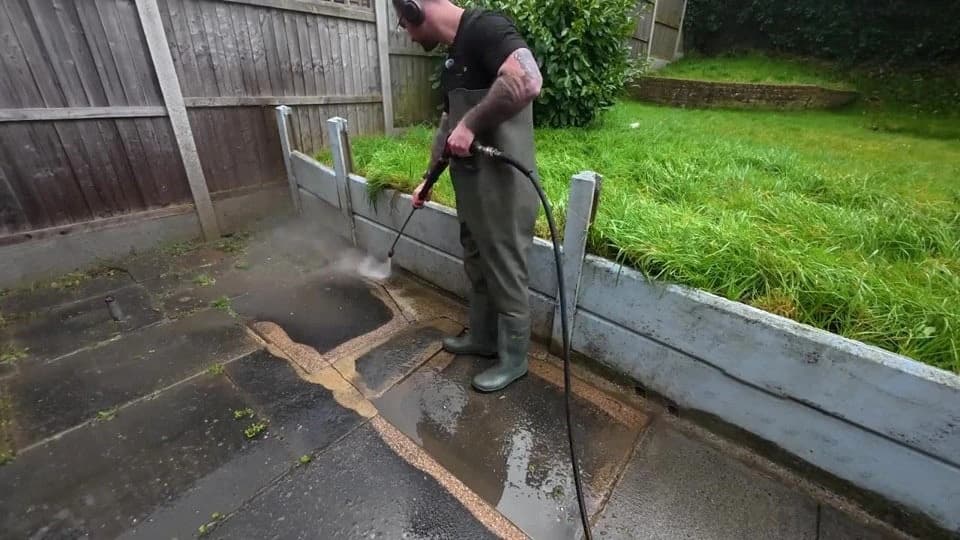
Exterior mold, mildew and algae removal is the professional cleaning of visible organic growth and staining from outdoor building surfaces and other exterior areas.
Growth commonly appears as green, black, gray or dark staining on shaded or moisture-prone surfaces. Depending on the surface and conditions, the buildup may involve algae, mildew, mold or a combination of organic growth and accumulated dirt.
The correct cleaning approach depends on the material and condition of the surface. Some surfaces are suitable for pressure washing, while others are better suited to a lower-pressure soft-washing approach.
The objective is not simply to blast the surface with water. A properly planned cleaning addresses the buildup while reducing the risk of unnecessary pressure, surface damage and surrounding-property exposure.
Exterior staining is not always easy to identify from appearance alone.
Green growth may be algae or another form of organic buildup. Dark staining may involve mold, mildew, algae, dirt or a combination of contaminants. A visual inspection can help determine the appropriate cleaning approach, but exterior cleaning should not be represented as laboratory mold testing or environmental mold identification.
For that reason, the practical question for most property owners is:
What cleaning method is appropriate for this exterior surface and the growth present?
Jacksonville properties deal with conditions that can encourage recurring organic buildup on outdoor surfaces.
Warm temperatures, humidity, rainfall and shaded areas can leave exterior materials damp for extended periods. Dirt and organic debris can then accumulate on those surfaces, creating conditions where algae, mildew and other organic growth become increasingly noticeable.
Moisture is one of the most important factors in mold and organic growth. EPA guidance identifies moisture control as fundamental to controlling mold growth.
For exterior surfaces, moisture can come from several sources:
Cleaning removes existing buildup, but it does not permanently change the environmental conditions that allow organic growth to return.
Walls and exterior surfaces that receive less direct sunlight can remain damp longer than surfaces exposed to full sun.
That is one reason property owners may notice heavier green or dark staining on:
Rainfall can leave surfaces wet while also carrying dirt and organic material onto siding, concrete and other exterior surfaces.
Leaves, pollen, soil and vegetation can add additional organic material to already damp areas.
This does not mean every stain is mold. It means the exterior environment can contribute to a combination of moisture, organic material and staining that requires periodic cleaning.
Exterior organic growth does not always look the same.
Some surfaces develop bright green algae. Others develop dark staining or a dull film that becomes more noticeable around shaded areas.
Green algae can appear as green or greenish-black buildup on exterior surfaces.
It is particularly noticeable on:
Algae can make hard surfaces look dirty and, when combined with moisture, may contribute to a slippery surface condition.
Mildew can appear as gray, white, greenish or dark discoloration depending on the surface and environmental conditions.
Exterior mildew is often associated with areas that stay damp or receive limited sunlight.
Visible exterior mold-like growth can occur on damp outdoor surfaces. However, not every dark or green stain should automatically be labeled as mold.
The appropriate cleaning method should be based on the visible condition, surface material and type of buildup rather than assuming that every stain represents the same contaminant.
Dark or black staining is common on some exterior surfaces.
It may be associated with organic growth, accumulated dirt, algae or other surface contamination. Cleaning can improve the appearance, but some staining can penetrate or discolor a material and may not disappear completely.
A property may have several contaminants at once:
A professional exterior cleaning assessment considers the entire surface instead of treating one keyword or contaminant in isolation.
The appropriate cleaning method changes with the material.
A surface that can tolerate conventional pressure washing may require a different approach from siding, painted surfaces or other more delicate materials.
| Surface | Common Problems | Typical Cleaning Approach |
|---|---|---|
| House siding | Algae, mildew, dirt, organic staining | Often soft washing or low-pressure cleaning |
| Stucco | Organic growth, dirt, staining | Surface-appropriate low-pressure cleaning |
| Brick | Algae, mildew, dirt, organic buildup | Controlled pressure and/or cleaning solution |
| Concrete | Green algae, mold-like staining, dirt | Pressure washing and/or treatment |
| Driveways | Algae, grime, dirt, organic staining | Surface cleaning and appropriate pressure |
| Sidewalks | Algae, mildew, dirt and grime | Controlled pressure cleaning |
| Patios | Organic growth, dirt and staining | Method selected for material |
| Pool decks | Algae, mildew, dirt and buildup | Surface-appropriate cleaning |
| Pavers | Organic growth, dirt and staining | Controlled cleaning based on material and condition |
| Fences | Algae, mildew, dirt and weathering | Often lower-pressure cleaning |
| Commercial exteriors | Organic growth, dirt and staining | Scope-specific exterior cleaning |
Important: not every surface requires the same pressure, chemical treatment or cleaning sequence. The condition of the material matters just as much as the contaminant.
Siding can accumulate algae, mildew and dirt, especially on shaded elevations.
Vinyl, painted surfaces, fiber-cement products and other siding materials should not automatically be treated with the same pressure used for concrete.
A lower-pressure cleaning method may be more appropriate when the goal is to remove organic growth without unnecessarily forcing water behind siding or damaging a coating. For the whole home exterior, see house washing.
Concrete can develop green algae, dark staining and organic buildup, particularly in shaded or damp locations.
Driveways, sidewalks, patios and pool decks may require more mechanical cleaning than delicate siding, but the appropriate pressure still depends on the condition and finish of the concrete. Flatwork is covered in detail under driveway and concrete cleaning.
Roof growth is a separate cleaning consideration because roofing materials can be damaged by inappropriate pressure.
For that reason, this page does not treat roof cleaning as interchangeable with general exterior mold and mildew removal.
Outdoor recreation areas can develop algae, mildew and dirt where water, shade and organic debris remain on the surface.
Pool decks deserve particular attention because excessive pressure, unsuitable chemicals or poor rinsing practices can affect surrounding finishes and landscaping — see pool deck cleaning for that surface specifically.
There is no single pressure setting that is appropriate for every exterior surface.
The distinction between pressure washing and soft washing is primarily about how the surface is cleaned, not simply whether a pressure washer is present.
| Factor | Pressure Washing | Soft Washing / Low-Pressure Cleaning |
|---|---|---|
| Main action | Mechanical water pressure | Cleaning solution plus controlled rinsing |
| Typical applications | Concrete and durable hard surfaces | Siding, delicate exteriors and organic growth |
| Pressure | Higher than soft washing | Lower-pressure application/rinse |
| Organic buildup | Can remove buildup mechanically | Cleaning solution can help break down organic growth |
| Surface consideration | Requires appropriate pressure | Designed to reduce unnecessary mechanical force |
| Best approach | Depends on surface | Depends on surface and condition |
Pressure washing can be appropriate for durable surfaces such as certain concrete and flatwork applications.
The pressure still needs to be appropriate for the surface.
Too much pressure can:
Soft washing generally uses a cleaning solution followed by a controlled low-pressure rinse.
This can be useful when organic growth needs chemical treatment rather than simply being blasted from the surface.
The cleaning method should be selected according to: surface + contaminant + condition + surrounding environment.
That is more important than choosing “pressure washing” or “soft washing” as a one-size-fits-all label.
A professional exterior cleaning process should be based on the property rather than a fixed pressure setting or identical chemical treatment for every job.
The first step is identifying the surface material, visible organic growth, staining, existing deterioration, delicate finishes, nearby landscaping, access conditions and potential areas requiring additional care. Pre-existing damage should be considered before cleaning begins.
Before applying water or cleaning solution, surrounding areas should be considered. Depending on the property, preparation can include moving or protecting exterior items, checking windows and doors, protecting sensitive areas, wetting or protecting vegetation where appropriate, considering nearby electrical components and identifying drainage and runoff paths.
Depending on the surface and contaminant, a professional may use a suitable cleaning solution or pretreatment. Sodium hypochlorite is one chemical used in some professional exterior-cleaning applications, but concentration, formulation, dwell time and application method must be selected for the particular surface and job. More chemical is not automatically better.
A cleaning solution may need time to work on organic buildup before the final rinse. The appropriate dwell time varies with surface, temperature, weather, solution, concentration, contaminant and degree of buildup. There is no universal dwell time that should be applied to every exterior surface.
After the cleaning solution has had appropriate time to work, the surface is rinsed using a method appropriate for the material. The objective is to remove loosened contamination without unnecessarily damaging the surface.
Some exterior-cleaning applications may use a post-treatment when appropriate. The property should then be checked for remaining buildup, missed areas and any obvious issues requiring additional attention.
Simply blasting an exterior surface with water does not always address organic buildup effectively.
A suitable cleaning solution can help break down or loosen biological and organic contamination before rinsing.
That is one reason soft-washing methods are commonly used for exterior siding and similar surfaces.
However, chemical treatment is surface-specific.
A solution suitable for one exterior material may be inappropriate for another. It can also affect vegetation, metals, coatings and nearby materials if improperly applied.
Sodium hypochlorite appears frequently in professional exterior-cleaning discussions because it can be used in certain applications involving organic growth.
It should not be treated as a universal “mold killer” or a chemical that can safely be applied at the same strength to every surface.
Professional application requires consideration of:
EPA also cautions that biocides such as chlorine bleach are not recommended as a routine practice for ordinary indoor mold cleanup and warns against mixing chlorine bleach with ammonia-containing products because toxic fumes can result.
For exterior cleaning, chemical selection and application should likewise be handled carefully and according to the particular cleaning system and product requirements.
Jacksonville homes can develop exterior organic buildup on multiple surfaces at the same time.
A homeowner may notice green staining on the siding, dark growth on a shaded wall and algae on the driveway.
That does not necessarily mean every surface should be cleaned using the same method.
Exterior cleaning may include:
Common triggers include:
For a complete home exterior, related services can sometimes be combined into a broader exterior-cleaning project.
Commercial properties can experience the same organic buildup as residential properties, but larger surfaces and higher foot traffic can make exterior maintenance more important.
Potential applications include:
Commercial properties often combine multiple materials in one location.
For example, a storefront may contain:
Each material may react differently to water pressure and cleaning chemicals.
A commercial exterior-cleaning plan should therefore account for the entire property rather than applying the same process everywhere. Larger sites are handled through our commercial pressure washing service.
The same environmental factors can affect different properties in different ways.
Organic buildup may be more noticeable around:
Coastal and near-coastal properties may also have additional environmental exposure, although the exact condition varies by property and location.
The important point is that Jacksonville's environment can contribute to recurring exterior buildup, but cleaning frequency should be determined by the property rather than by a fixed calendar.
Exterior mold, mildew and algae cleaning is available for properties within the business's established Jacksonville service area.
The core market is:
Service availability can vary by location, property type and project scope. If you are outside the primary Jacksonville service area, contact us with the property location so we can confirm whether the project is within our coverage area.
Depending on the service area and project requirements, exterior-cleaning requests may also come from communities such as:
These locations should be treated as service-area references only where the business actually accepts work there.
Cleaning removes existing buildup, but it cannot permanently eliminate the environmental conditions that contribute to organic growth.
EPA guidance similarly emphasizes that controlling moisture is fundamental to controlling mold growth.
For exterior surfaces, property owners can pay attention to:
Check for:
Where practical, reduce conditions that keep surfaces wet for extended periods.
This can include managing vegetation that blocks airflow or identifying areas where water consistently accumulates.
Water management around a building affects exterior moisture.
Gutters, downspouts and drainage paths should be maintained so that water is directed away from areas where it can repeatedly wet exterior surfaces.
Routine exterior cleaning can remove accumulated organic growth before it becomes a heavier staining problem.
The appropriate interval depends on:
There is no universal cleaning frequency that fits every Jacksonville property.
Organic growth can return because cleaning removes existing buildup but does not permanently remove moisture, shade, rainfall, organic debris or other environmental conditions.
This is especially relevant in warm, humid environments.
Common reasons for recurrence include:
A clean surface can therefore become stained again over time.
The goal of maintenance is not to promise that growth will never return. The goal is to remove existing buildup and manage the exterior environment as reasonably as possible.
Two houses can have similar-looking staining but require different cleaning approaches.
Results can depend on:
Some staining can remain even after the organic material has been removed because the surface itself may have been discolored.
For that reason, professional cleaning should focus on appropriate treatment and realistic expectations, rather than promising that every surface will return to its original appearance.
Good exterior cleaning is not just about making a surface look cleaner.
It is also about controlling where water and cleaning solution go.
Plants and landscaping can be sensitive to cleaning solutions and runoff.
Depending on the job, appropriate precautions can include:
Different materials have different tolerances.
Excessive pressure can damage surfaces, while unsuitable cleaning chemicals can affect coatings, metals, plants or other nearby materials.
That is why the appropriate method should be determined before cleaning begins.
Exterior cleaning produces wastewater and loosened surface contaminants.
Runoff should be considered during job planning, especially around storm drains, landscaped areas, neighboring properties and sensitive surfaces.
Cleaning cannot repair:
Existing deterioration should be identified before cleaning so that the cleaning method does not create unrealistic expectations.
No. Exterior surface cleaning is not the same service as indoor mold remediation.
This page covers visible organic growth and staining on outdoor surfaces such as siding, walls, concrete, patios and other suitable exterior areas.
It does not represent services such as:
If you have an indoor mold or water-damage problem, the appropriate professional may be a qualified mold-remediation or environmental specialist rather than an exterior pressure-washing company.
EPA notes that the appropriate response to mold depends on the size and circumstances of the problem, and extensive water damage or larger indoor mold problems may require specialized evaluation.
This page is intentionally focused on organic growth and exterior surface contamination.
Related services solve different parts of the property-maintenance problem.
| Service | Primary Focus |
|---|---|
| Exterior mold, mildew & algae removal | Organic growth and staining on exterior surfaces |
| House washing | Broad cleaning of the home's exterior |
| Roof cleaning | Roof-specific organic growth and staining |
| Driveway/concrete cleaning | Dirt, algae, grime and staining on hard surfaces |
| Pool deck cleaning | Organic growth and buildup around pool areas |
| Commercial pressure washing | Larger commercial exterior surfaces |
| Exterior cleaning | Broader property-wide exterior maintenance |
If the primary problem is organic growth on a home's siding or exterior wall, this page is the appropriate starting point.
If the project involves the entire house exterior, house washing may be the better service path.
If the problem is primarily on a roof, use the dedicated roof cleaning service.
There is no single cleaning schedule that is right for every Jacksonville property.
A property with heavy shade, moisture and vegetation may develop organic buildup sooner than a sunny, open property.
Consider:
Instead of cleaning strictly according to a fixed number of months, look for signs such as:
A recurring maintenance plan can make sense for properties where organic growth returns regularly.
The cost of exterior growth removal depends on the property and the amount of work required.
Important pricing factors include:
For example, cleaning a small exterior wall is fundamentally different from treating an entire commercial building with multiple elevations and hard surfaces.
Because of these variables, an accurate estimate should be based on the actual property rather than a generic per-square-foot price.
A professional exterior-cleaning estimate should give you a clearer understanding of:
You should also tell the cleaning professional about any known:
Clear information before the job helps reduce surprises during the cleaning process.
The questions Jacksonville homeowners ask us most about this service, answered straight.
Call us or send a message — we will give you a straight answer, whether or not it leads to a booking.
Call NowMold, mildew and algae are different types of biological growth, but exterior staining can make them difficult to distinguish visually. Green staining is often associated with algae or organic growth, while darker staining may involve mildew, mold-like growth, dirt or multiple contaminants. Exterior cleaning focuses on selecting an appropriate cleaning method for the visible surface condition rather than treating every stain as identical.
Yes, exterior siding can often be cleaned to remove visible organic growth, including mold-like staining, mildew and algae. The cleaning method should be selected according to the siding material and its condition. Lower-pressure or soft-washing methods are often considered for surfaces that could be damaged by excessive pressure.
It depends on the siding material, condition and pressure being used. Excessive pressure can damage siding, coatings or adjacent areas. A surface-appropriate low-pressure or soft-washing approach may be more appropriate for some siding materials.
Neither method is universally better. Soft washing can be useful for organic growth on surfaces where excessive mechanical pressure is undesirable, while pressure washing can be appropriate for durable surfaces such as certain concrete applications. The correct choice depends on the surface and contamination.
Yes. Concrete can develop green algae and other organic buildup, particularly in damp or shaded areas. Depending on the condition of the concrete, cleaning may involve mechanical surface cleaning, an appropriate treatment, or a combination of methods.
Visible organic growth and staining on driveways can often be cleaned. The appropriate pressure and cleaning method depend on the concrete condition, finish, staining and surrounding property.
Cleaning removes existing buildup, but it does not permanently eliminate environmental conditions such as humidity, shade, rain, vegetation or sprinkler overspray. If moisture and favorable conditions remain, organic growth can return over time.
Humidity alone does not mean every exterior surface will develop mold, but moisture is an important factor in mold and organic growth. Jacksonville's warm, humid and rainy environment can create conditions where exterior surfaces remain damp and organic buildup becomes more noticeable.
North-facing surfaces may receive less direct sunlight, depending on the property's orientation and surrounding structures. Reduced sunlight can allow surfaces to stay damp longer, which can contribute to algae and other organic growth.
Sodium hypochlorite can be part of some professional exterior-cleaning treatments for organic growth. The appropriate concentration, application method and dwell time depend on the surface and cleaning system. It should not be treated as a universal solution for every material.
Dwell time is the period a cleaning solution remains on a surface before the next cleaning or rinsing step. The appropriate dwell time depends on the product, concentration, weather, surface and contaminant.
Not necessarily. Some staining can remain after organic material has been removed because the stain may have affected or discolored the underlying material. Results depend on the surface, age of the stain and condition of the material.
No exterior cleaning company can responsibly guarantee that organic growth will never return. Cleaning removes existing buildup, while factors such as moisture, shade, rainfall and vegetation can continue to influence future growth.
Small, straightforward exterior cleaning tasks may be manageable for some homeowners, but professional service can be useful when surfaces are delicate, elevated, heavily stained, difficult to access or adjacent to sensitive landscaping. Indoor mold presents a different issue. EPA recommends additional consideration for larger indoor mold problems and significant water damage.
No. This service page is specifically for exterior surface cleaning. It should not be interpreted as an offer of indoor mold remediation, mold testing, indoor mold inspection or environmental mold assessment.
Commercial exterior cleaning can include suitable building exteriors, walkways, concrete, storefront areas and other outdoor surfaces depending on project scope. Larger properties may require a site-specific assessment because several different materials can be present.
There is no single price because cost depends on surface area, material, condition, buildup, access, cleaning method and project scope. Requesting a property-specific estimate is the best way to determine the actual cost.
Contact us with the Jacksonville property address and describe the exterior surfaces that need cleaning. Photos can also help communicate the areas of concern before an estimate or site visit.
Organic growth rarely stops at one surface. These are the services most often cleaned at the same visit.
Low-pressure cleaning for vinyl, stucco, brick, fiber cement and painted wood, including soffit, fascia and gutter exteriors.
House washing in Jacksonville →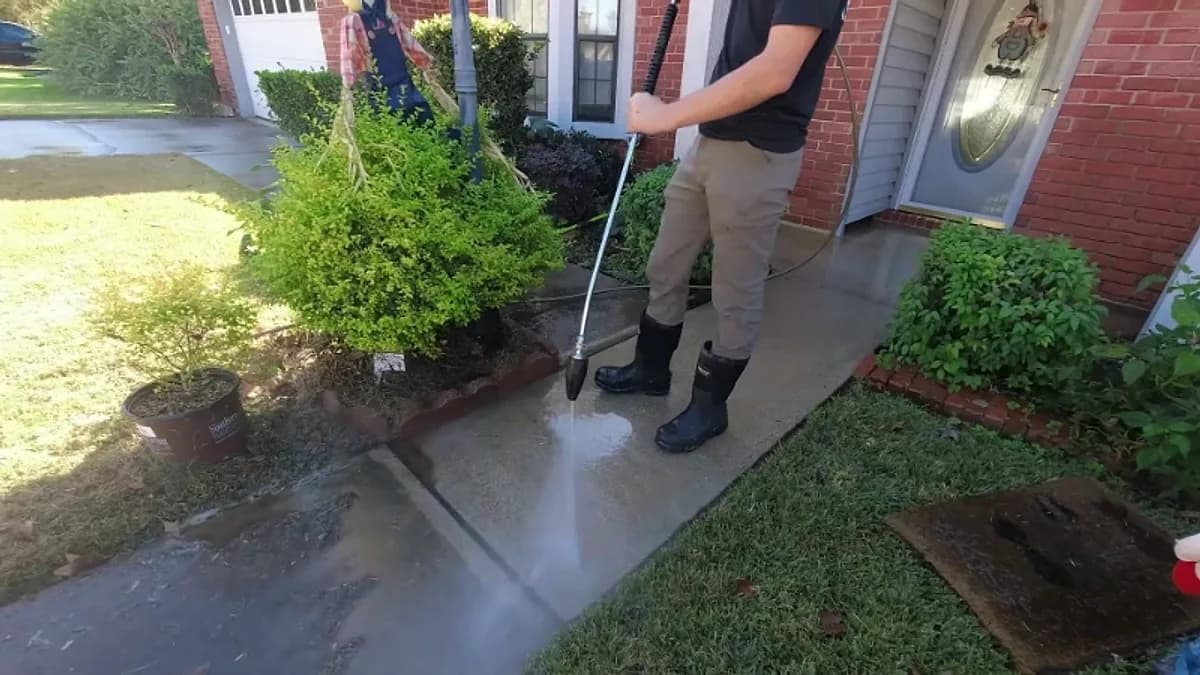
Soft wash treatment for the black streaking on shingle, tile and metal roofs. No pressure on the roof surface at any point.
Roof cleaning →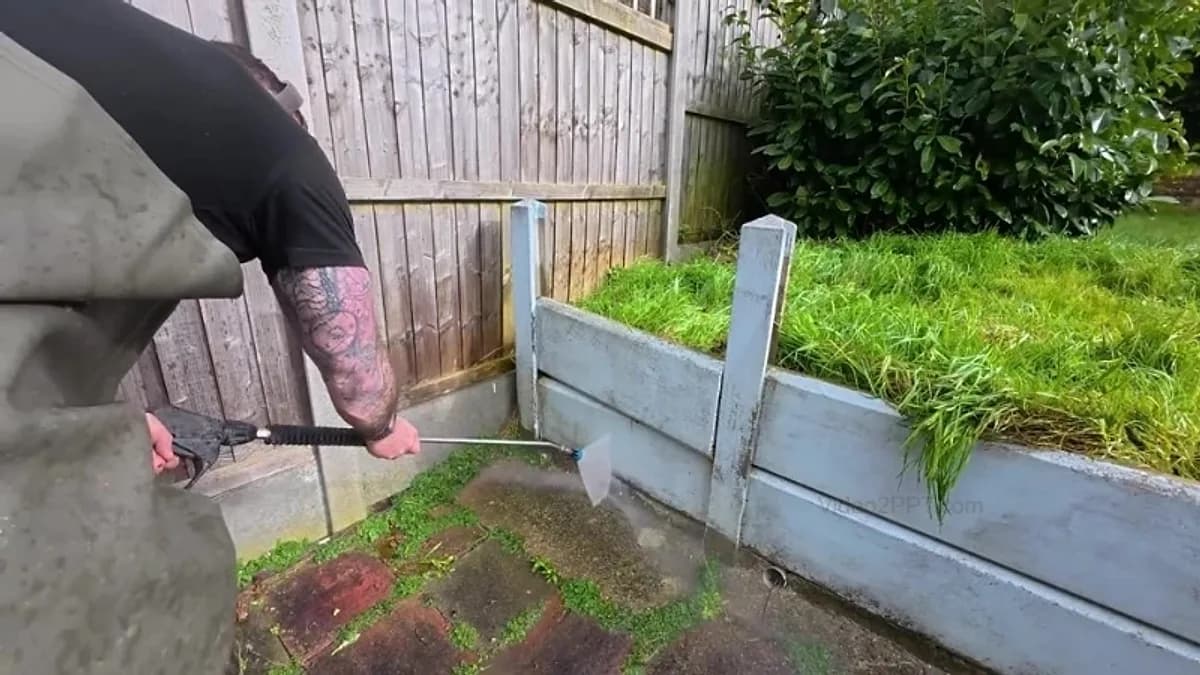
Pressure-treated wood, composite decking, vinyl and wood fencing, each at its own pressure.
Deck and fence cleaning →Green algae, dark staining and mildew can make an otherwise well-maintained Jacksonville property look neglected.
The right cleaning approach depends on what is growing, where it is growing and what surface it is growing on.
If the problem is on an exterior surface, request an estimate and let us determine the appropriate cleaning approach for the property. Call (904) 938-8585 for exterior cleaning.
Serving Jacksonville and the surrounding Northeast Florida market within our established service area.
Call Now