All Commercial Services
The full commercial scope across office, retail, industrial, community and parking property.
Commercial pressure washing →Parking surface cleaning is a different discipline from the rest of exterior cleaning. The areas are large, the soiling is petroleum based, the site has to keep operating while the work happens, and the water has somewhere to go that regulators care about. Done properly it is a planned operation with a traffic plan and a containment plan, not a crew with a hose.
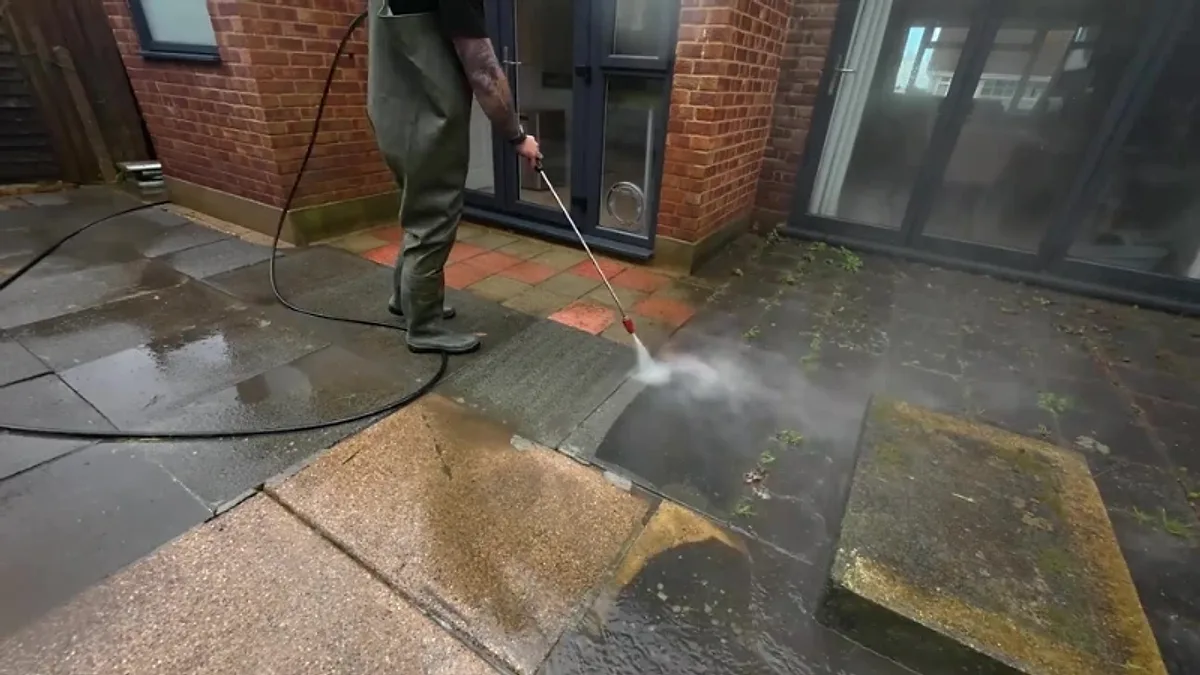
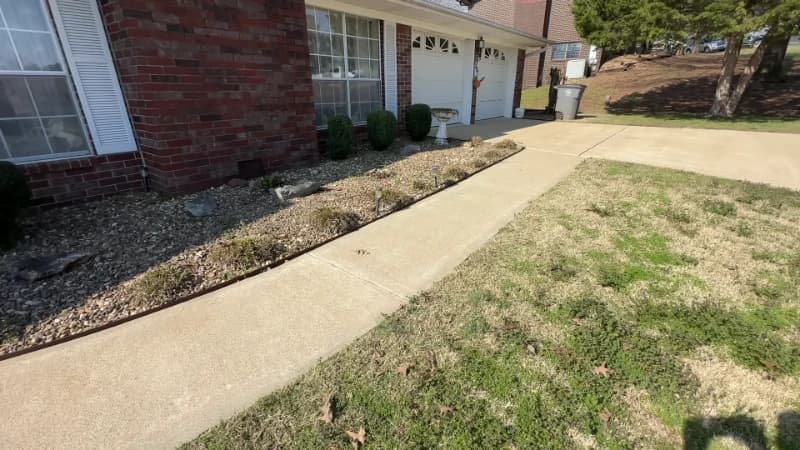
Jacksonville Cleaning Pros cleans surface lots, parking decks and enclosed garages for office buildings, shopping centers, apartment and multifamily communities, medical and institutional properties and mixed-use buildings across Jacksonville and the First Coast.
Call (904) 938-8585 to walk the site, or ask for a sectioned plan that keeps your parking in service.
This distinction decides the method and it is worth understanding before comparing quotes.
Concrete takes a rotary surface cleaner, hot water where oil is involved, and post-treatment for organic staining. It cleans up close to its original color and it tolerates the pressure required.
Asphalt does not. High pressure on asphalt strips sealcoat, lifts the binder and exposes aggregate, which turns a cleaning job into a resurfacing job. Asphalt is cleaned at reduced pressure with the emphasis on degreaser and heat, and the honest expectation is spot treatment of oil and stains plus general soiling removal, not a uniform color change across the lot. Any contractor promising a blacktop lot will come back looking new either intends to seal it afterwards or has not thought it through.
Line striping is worked around at reduced pressure. Paint that is already at the end of its life will lift regardless of method, so on a lot with failing markings the sensible sequence is clean first, restripe after.
Structures add problems that a surface lot does not have:
This is the part that separates commercial parking work from everything else. Wash water off a parking surface carries oil, grease, brake dust, heavy metals and detergent. Storm drains do not lead to a treatment plant. They discharge to creeks, the river and eventually the ocean, untreated.
Under the Clean Water Act, discharging pollutants to a municipal storm sewer system without a permit is prohibited, and municipal stormwater programs push that responsibility down to the property and the contractor working on it. In practice that means the property owner, not just the contractor, can end up holding an enforcement problem created by a cheap wash.
Standard practice on a parking job:
If a quote for a parking lot does not mention where the water goes, that is the question to ask before comparing the price.
Nobody can hand over an entire lot or garage for a day. The work is sectioned:
| Property type | Typical interval |
|---|---|
| Retail and restaurant lots | Quarterly to twice a year, entrances more often |
| Office and multi-tenant lots | Annually, twice a year under heavy tree cover |
| Parking decks and garages | Annually, with stairwells and pedestrian routes quarterly |
| Medical and institutional | Twice a year, entrances and drop-off zones quarterly |
Jacksonville's humidity and rainfall keep shaded sections of any lot damp long enough for organic growth to establish, and mature tree canopy over perimeter parking accelerates it. Structures hold that dampness on lower and interior levels year round.
Call us or send a message — we will give you a straight answer, whether or not it leads to a booking.
Call NowNot into the storm drain. Drains in the work area are covered or plugged, berms control the flow, and the water is recovered and disposed of at an approved point. On a parking surface this matters more than anywhere else on a commercial property, because the material being removed is oil, brake dust and detergent, and storm drains discharge to waterways without treatment.
No. The site is worked in sections, one row, aisle or level at a time, with the rest of the parking in service. Access routes and fire lanes stay open. Large sites are usually done overnight or over a weekend because it is faster and quieter.
It can, if the wrong method is used. Asphalt is cleaned at reduced pressure with degreaser and heat rather than force, because high pressure strips sealcoat and exposes aggregate. Striping is worked around at reduced pressure, and paint already at the end of its life will lift no matter who cleans it. On a lot with failing markings, clean first and restripe afterwards.
Sometimes. Fresh and moderate staining usually comes out with hot water and a degreaser. Oil that has soaked into porous concrete or asphalt over years may lighten substantially rather than disappear, and anyone promising complete removal without seeing the surface is guessing. What is achievable gets assessed at the walk-through.
Yes. Structures are cleaned top down with drainage understood first, including ceilings, beams, columns, stairwells and pedestrian areas. Restricted headroom and enclosed ventilation affect equipment and chemistry choices, which is why structures get walked before they get quoted.
Most commercial lots are on an annual to twice-yearly cycle, with entrances and pedestrian routes more often. Heavy tree cover, food-service tenants and high turnover all shorten the interval. Garages generally need annual cleaning with stairwells and lobbies on a quarterly cycle.
We cover all of Jacksonville and Duval County, from the historic districts to the beaches. If your neighborhood is not listed, it is still worth asking.
Not sure if we reach you? Get in touch and we will tell you straight away.
Other property types in the commercial scope, each with its own operational detail.
The full commercial scope across office, retail, industrial, community and parking property.
Commercial pressure washing →Bid by board or CAM manager on annual contracts — an entirely different sales motion from a one-off wash.
HOA & Property Management →Recurring, high-volume contract work with its own operational language that no other page can hold naturally.
Apartment & Multi-Family →Send the address, the approximate size and whether it is surface, deck or enclosed. You get a sectioned plan, a containment approach and a written quote. Parking is one of five commercial scopes on this site; the rest sit under commercial pressure washing in Jacksonville. Call (904) 938-8585 or contact us.
Call Now