Driveway & Concrete Cleaning
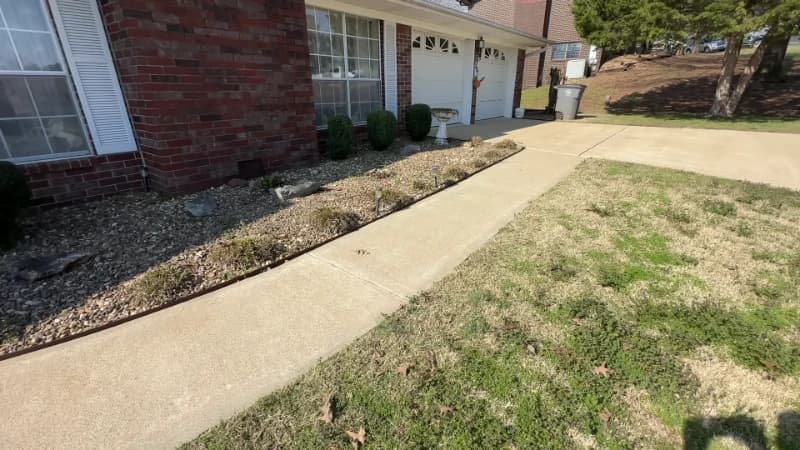
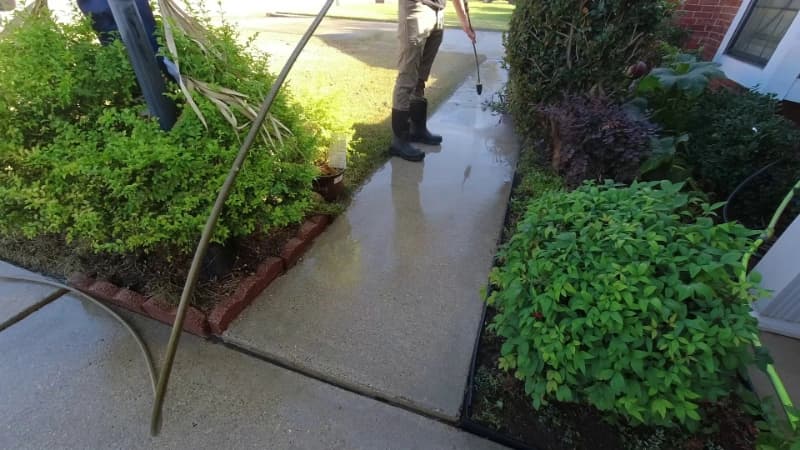
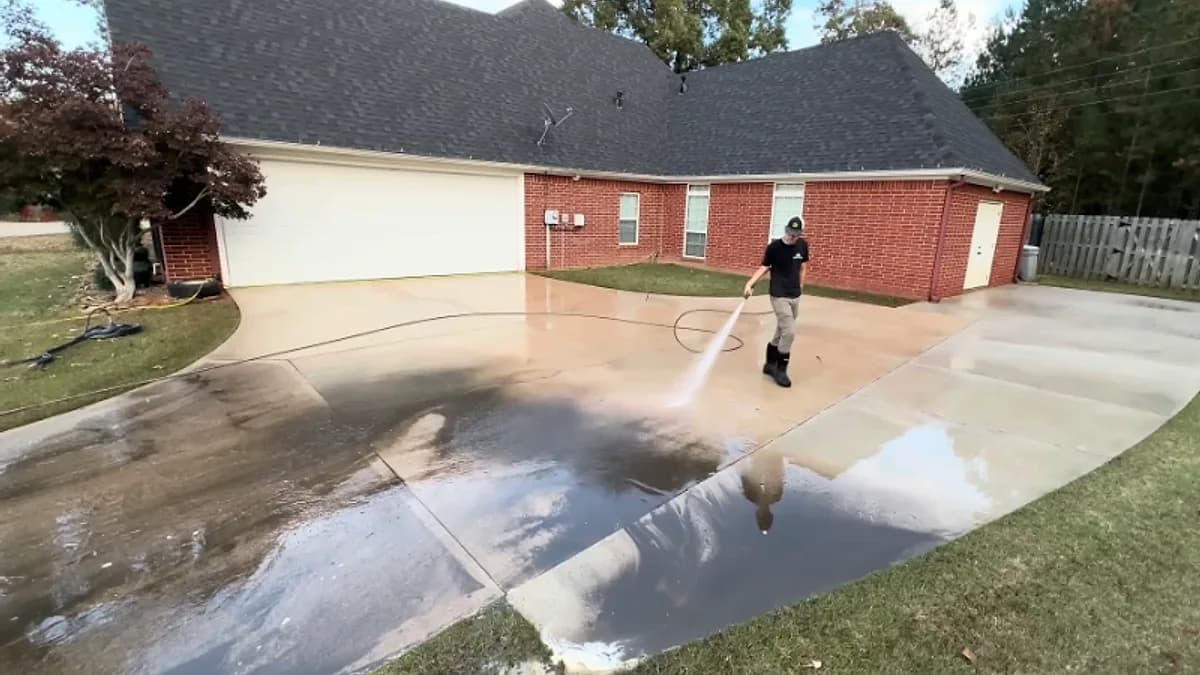
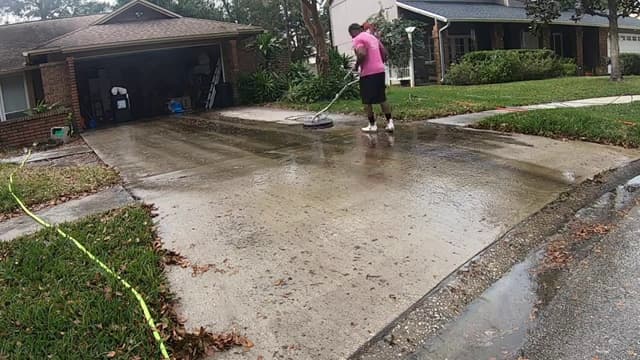
Driveways, sidewalks, walkways, garage floors and entryways cleaned with a surface cleaner for an even finish, then post-treated.
Driveway and concrete cleaning →Stubborn stains can make an otherwise clean driveway, sidewalk, patio, pool deck, or commercial concrete surface look permanently discolored. Rust, oil, grease, gum, and mineral stains often require more than ordinary pressure washing.
Our rust, oil and stain removal service in Jacksonville, FL uses the appropriate cleaning and treatment approach for the stain, surface, and condition of the property. Instead of treating every stain the same way, we identify what is causing the discoloration and select a method designed for that specific problem.
Whether you are dealing with orange rust marks from irrigation, dark automotive oil spots, grease, chewing gum, or another stubborn concrete stain, we can assess the surface and explain what level of removal is realistically achievable.
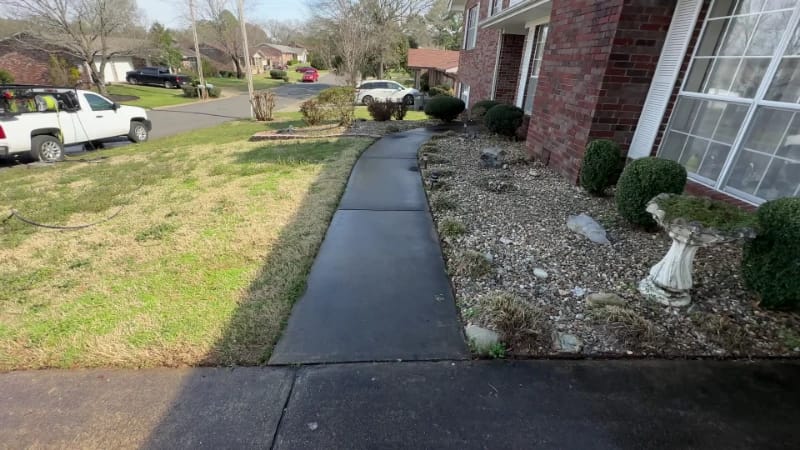
Concrete is porous. That means substances sitting on the surface can gradually work into the material and become much harder to remove.
A general surface cleaning can remove dirt, algae, pollen, and other surface buildup, but rust, oil, grease and gum behave differently. Each contaminant requires a treatment suited to its properties.
For example:
The objective is not simply to use more pressure. The objective is to use the right combination of cleaning chemistry, dwell time, agitation, pressure, temperature, and rinsing for the surface and contaminant.
One of the biggest mistakes in stain removal is treating every discoloration as if it were ordinary dirt.
A dark oil spot, orange rust stain, and piece of chewing gum may all appear on the same driveway, but they are different cleaning problems.
| Stain or contaminant | Common source | Typical treatment consideration |
|---|---|---|
| Rust / iron staining | Irrigation, well water, metal runoff, fertilizers, rusting metal | Targeted rust or iron treatment followed by appropriate rinsing |
| Oil | Vehicle leaks, motor oil, automotive fluids | Degreasing, dwell time, agitation and pressure/hot-water cleaning where appropriate |
| Grease | Vehicles, equipment, food-service areas | Degreasing and deeper cleaning |
| Chewing gum | Sidewalks, storefronts, parking areas | Targeted gum removal and mechanical treatment |
| Mineral staining | Irrigation overspray, mineral deposits | Treatment selected for the mineral causing the discoloration |
| Tire marks | Vehicle traffic | Surface-specific cleaning and agitation |
| Organic staining | Moisture, algae, mildew and environmental buildup | Appropriate exterior-cleaning treatment rather than stain chemistry alone |
The right treatment depends on the actual stain, the age of the discoloration, the surface material, and whether the substance has penetrated the surface. Stain work sits alongside our broader pressure washing services in Jacksonville rather than replacing them.
Orange and reddish-brown stains on concrete are often associated with iron or rust.
In Jacksonville-area properties, irrigation and water-related mineral deposits can be an important source of orange staining. Rust can also come from metal furniture, railings, fixtures, fertilizer, tools, or other metal objects contacting the surface. Concrete-industry guidance notes that rust can penetrate the pores of concrete and that identifying the source is important because staining can return if the source remains.
Common causes include:
The appearance alone does not always identify the exact source. An inspection of the surrounding area can help determine whether the stain is coming from irrigation, a metal object, a vehicle, fertilizer, or another source.
Pressure washing alone is often not enough to remove established rust stains from concrete.
Rust is chemically different from ordinary dirt and surface grime. A targeted rust-removal treatment may be needed to react with the iron staining before the surface is rinsed.
Concrete Network similarly notes that rust stains generally require an appropriate chemical treatment rather than relying on pressure washing alone.
That is why increasing pressure is not automatically the solution. Excessive pressure can damage concrete while leaving the underlying chemical stain behind.
Driveways are especially susceptible to rust staining because they are exposed to:
A professional treatment starts by identifying the stain and checking the concrete's condition. The treatment is then selected according to the surface and staining.
If orange staining repeatedly appears along sprinkler patterns, around irrigation heads, or where water regularly reaches the concrete, the irrigation source may be contributing to the problem.
Removing the visible stain can improve the appearance, but reducing the source of the staining is important for long-term results.
Oil stains are another common problem on residential driveways and commercial concrete.
Automotive oil can soak into porous concrete, which is why an old black or dark-brown spot may remain even after the surrounding concrete has been cleaned.
Depending on the surface and scope of the job, stain treatment can address problems such as:
Sometimes, but pressure washing by itself is not always enough.
Fresh or relatively shallow oil contamination may respond well to appropriate degreasing and cleaning. Older stains can penetrate deeper into porous concrete and may only lighten rather than disappear completely.
The treatment normally needs to address the oil itself rather than simply blasting the surrounding concrete with water.
Concrete contains pores and surface texture that can hold oil below the immediately visible surface.
As a stain ages, repeated vehicle traffic, heat, weather and additional contamination can make the affected area increasingly difficult to restore.
That means there is an important difference between removing the surface residue and removing every trace of a deeply embedded stain.
A professional assessment should establish realistic expectations before treatment.
Chewing gum creates a different cleaning problem.
Unlike oil or rust, gum is a sticky material that adheres to concrete and can become flattened into the surface by foot traffic, heat and time.
Gum is particularly noticeable on:
The goal is to loosen the gum sufficiently to remove it without unnecessarily damaging the surrounding concrete.
Depending on the location and condition, treatment can involve:
For commercial properties, removing individual gum spots can also be incorporated into broader sidewalk or concrete-cleaning work.
Not every stain is rust or oil.
A concrete surface can develop discoloration from a combination of environmental exposure, minerals, vehicles, organic matter and previous cleaning or maintenance.
Potential problems include:
If the source of a stain is unclear, the best approach is to inspect the discoloration before selecting a treatment.
Stain removal is not limited to one type of exterior surface.
Depending on the condition and material, treatment may be appropriate for:
Driveways commonly develop oil spots, rust staining, tire marks, irrigation discoloration and general environmental buildup.
Sidewalks can accumulate gum, dirt, organic buildup, rust marks and other foot-traffic-related staining.
Outdoor furniture, irrigation, food spills and environmental exposure can contribute to discoloration.
Pool decks may experience mineral deposits, rust staining, organic buildup and staining associated with surrounding landscaping and irrigation. Routine maintenance for these surfaces is covered by our pool deck and patio cleaning service.
Pavers can develop rust, oil, grease and mineral discoloration, although treatment needs to account for the particular paver material and joint condition — see paver cleaning and sealing for the restorative side of that work.
Parking areas, storefront walkways, service areas and other commercial surfaces can accumulate oil, grease, gum, rust and vehicle-related staining, often as part of a wider commercial pressure washing program.
A good stain-removal job is not simply a matter of pointing a pressure washer at the stain.
We first look at the color, location, pattern, surrounding conditions and surface material. For rust, for example, we look for possible sources such as irrigation overspray, metal objects or water-related mineral deposits. For oil, we consider whether the staining appears fresh, established, concentrated or spread through the concrete.
The same treatment should not automatically be used on every surface. We consider concrete condition, surface age, existing coatings or sealers, porosity, cracks or damage, previous repairs, pavers or other materials, nearby landscaping, and drainage and runoff paths.
Rust, oil, gum and ordinary dirt require different approaches. The treatment may involve degreasing, targeted rust treatment, detergent, agitation, surface cleaning, pressure washing, hot-water cleaning where appropriate, controlled rinsing and spot treatment.
Cleaning products often need time to work. Immediately rinsing a treatment away may prevent it from doing what it was designed to do. Dwell time depends on the product, surface, weather and contaminant.
Some stains require mechanical action to help break up the contaminant. Agitation can be particularly useful for stubborn oil, grease and adhered material.
After treatment, the surface is rinsed and inspected. If a stain remains, that does not automatically mean that more pressure is the answer. A second treatment or different approach may be more appropriate.
Some stains can be substantially reduced but not completely erased. Deep oil contamination, staining associated with damaged concrete, or discoloration that has existed for years may not respond like a fresh surface stain.
Pressure washing and stain treatment are complementary, not competing, methods.
| Factor | Pressure washing | Targeted stain treatment |
|---|---|---|
| Surface dirt | Excellent | Usually unnecessary |
| Algae/organic buildup | Often appropriate | Depends on contaminant |
| Rust | Often insufficient by itself | Often required |
| Oil | May remove surface residue | Degreasing is often important |
| Gum | Usually requires additional treatment | Targeted removal is more appropriate |
| Mineral staining | May have limited effect | Treatment depends on mineral |
| Large concrete surfaces | Efficient | Often combined with surface cleaning |
| Deeply embedded stains | Results vary | May improve results but cannot guarantee complete removal |
The correct method is determined by the contaminant and surface, not by a single pressure setting.
A common assumption is that a tougher stain simply requires a stronger pressure washer.
That can be the wrong approach.
Concrete can be etched or damaged by inappropriate pressure, nozzle selection, technique or distance. A professional cleaning process should balance pressure with the surface condition and use chemistry when chemistry is what the stain actually requires.
For rust, for example, the problem is not simply dirt sitting on top of the concrete. It can involve iron-based staining that needs chemical treatment.
For oil, aggressive pressure without proper degreasing can clean the surrounding concrete while leaving the dark stain visible.
For homeowners, stain removal can make a significant difference on highly visible exterior surfaces.
Common residential applications include:
These issues are especially frustrating when the rest of the property is clean but a few concentrated stains remain visible.
A targeted treatment can be performed as a standalone service or considered alongside broader driveway and concrete cleaning, and it is often scheduled with house washing when the whole exterior is being refreshed.
Commercial properties face a different level of staining because surfaces experience more traffic and repeated contamination.
Commercial applications can include:
Commercial concrete may develop:
For a commercial property, stain removal may be combined with routine concrete or pressure washing so the property receives a more consistent overall appearance.
Jacksonville's climate matters when maintaining exterior surfaces.
NOAA climate information describes Jacksonville as having long, warm, relatively humid summers, with average relative humidity around 75% and significant rainfall, particularly during the summer.
That environment means exterior surfaces are repeatedly exposed to moisture.
Regular sprinkler overspray can leave mineral deposits on concrete, especially when water repeatedly lands in the same locations.
If the water contains iron, orange or rust-colored staining can develop.
Rain repeatedly wets exterior surfaces and can move contaminants across concrete, pavers and other hardscapes.
Florida's heat and strong outdoor exposure can accelerate the aging and weathering of exterior surfaces and make old contamination more difficult to address.
Properties closer to the Atlantic can also experience coastal exposure. The exact effect depends on the property's location, materials and surrounding conditions.
The important point is that Jacksonville properties do not exist in a dry, static environment. Exterior surfaces are continually exposed to weather, moisture, landscaping and traffic.
Repeated staining is often a source problem rather than simply a cleaning problem.
If a rust mark returns in the same area after cleaning, investigate what is producing it.
Possible sources include:
Removing the visible discoloration without addressing the source can result in the stain returning.
For irrigation-related rust, for example, adjusting the sprinkler pattern or addressing the water source may be necessary in addition to treating the existing stain.
Professional stain removal should consider more than the appearance of the concrete.
Cleaning chemicals and rinse water should be managed carefully around:
The objective is to remove the contaminant without unnecessarily damaging the underlying surface.
Concrete that is already cracked, spalled, deteriorated or otherwise damaged may have different cleaning limitations.
Stain removal can mobilize oil, grease, sediment, detergents and other contaminants. Pressure-washing wastewater should therefore be managed responsibly rather than casually allowing contaminated water to enter storm drains or waterways. EPA materials specifically identify pressure-washing wastewater as potentially containing pollutants such as oils, grease, detergents and sediment.
The exact wastewater-management requirements depend on the location, work being performed and applicable regulations.
There is no responsible single price for stain removal without seeing the property.
The cost can depend on:
A small, fresh oil spot is a different job from years-old oil contamination covering a large commercial parking area.
Likewise, a few light rust marks may require a very different treatment from widespread irrigation-related staining.
The goal of professional stain removal is to remove or substantially reduce visible staining while protecting the underlying surface.
However, no professional should guarantee that every old stain will disappear before seeing the property.
Results can be affected by:
Fresh contamination is generally easier to address than contamination that has remained in porous concrete for years.
The best way to establish expectations is to evaluate the actual stain rather than promise a result from a photograph or keyword description.
Removing the existing stain is only part of the solution.
Fix recurring irrigation overspray, vehicle leaks, rusting furniture or other sources where possible.
Oil and other substances are generally easier to address before they have had time to penetrate porous concrete. The Home Depot's concrete-cleaning guidance similarly recommends addressing spills promptly and matching the cleaner to the type of stain.
Regular driveway and concrete cleaning can prevent general grime and organic buildup from making isolated stains more noticeable.
A suitable concrete or paver sealer may help protect certain surfaces, although sealing is not appropriate for every material or condition.
A professional can determine whether sealing makes sense after evaluating the surface.
These services overlap, but they are not identical.
Regular driveway cleaning focuses primarily on broad surface cleaning: dirt, algae, mildew, pollen, grime and general buildup.
Stain removal focuses on specific contaminants that may require targeted treatment.
For example: a driveway can be completely cleaned and still have an oil spot or rust stain.
That is because the surrounding dirt has been removed while the chemically different stain remains.
This is why stain treatment is often best viewed as a specialized step within a broader exterior-cleaning strategy.
Our primary service area for this page is Jacksonville, Florida and Duval County.
Stain-removal needs can vary considerably between individual properties, so availability outside the primary Jacksonville service area should be confirmed before scheduling.
If you are in Jacksonville and have a rust, oil, grease, gum or other stubborn exterior stain, contact us with the property location and the surface involved.
Professional treatment is worth considering when:
A professional can determine whether the stain is actually removable, what treatment is appropriate, and what limitations the existing surface creates.
The questions Jacksonville homeowners ask us most about this service, answered straight.
Call us or send a message — we will give you a straight answer, whether or not it leads to a booking.
Call NowPressure washing alone often does not fully remove established rust stains. Rust is chemically different from ordinary dirt and may require a targeted rust-removal treatment before the surface is rinsed.
Orange stains are commonly associated with iron or rust. Potential sources include irrigation water, well-water minerals, sprinkler overspray, rusting metal, fertilizers and other iron-containing materials.
Yes. If irrigation water contains iron, repeated sprinkler overspray can leave orange or reddish-brown mineral staining where the water repeatedly contacts concrete.
Rust stains can often be treated and substantially reduced, depending on their age, source, depth and the condition of the driveway. Complete removal cannot be guaranteed without evaluating the actual stain.
It can help, but pressure washing alone is not always enough for oil. A degreaser and appropriate dwell time may be needed to break down the oil before pressure or hot-water cleaning is used.
Not always. Deeply embedded oil can remain below the concrete surface even after professional treatment. Older stains may be substantially lightened rather than completely erased.
The appropriate process depends on the stain. Professional treatment may involve degreasing, allowing the product to work, agitation and pressure or hot-water cleaning. The concrete is then rinsed and evaluated.
Recurring rust staining usually means the source has not been eliminated. Irrigation overspray, iron-containing water, rusting metal, fertilizers and other sources can continue depositing iron onto the surface.
Gum generally requires targeted loosening and mechanical removal rather than simply washing the entire surface with high pressure. The affected area can then be cleaned to remove remaining residue.
It can if inappropriate chemicals, concentrations or cleaning techniques are used. The treatment should be selected according to the surface material and condition, and surrounding materials should be protected.
Yes. Driveway pressure washing primarily cleans broad surface buildup. Rust removal is a targeted stain-treatment process that may use specialized chemistry before rinsing.
These stains can occur on commercial sidewalks, storefronts, parking areas and other concrete surfaces. The appropriate treatment depends on the contaminant, surface and scope of work.
Yes, whenever possible. If irrigation, rusting metal or another source continues depositing iron on the surface, the stain may return after cleaning.
Weather can affect cleaning chemistry, dwell time, drying and scheduling. Jacksonville's heat, humidity and rainfall mean the cleaning approach and timing may need to be adjusted to current conditions.
There is no universal time. A small isolated stain may be treated quickly, while multiple old stains across a large driveway or commercial property require more preparation, treatment and rinsing.
Not necessarily. Professional cleaning can significantly improve the appearance of many stained surfaces, but old staining, surface wear, discoloration below the surface and concrete damage can limit the final result.
Yes. In many cases, targeted stain treatment and broader driveway or concrete cleaning make sense together. The general surface can be cleaned while specific oil, rust or other stains receive additional treatment.
Stain treatment is usually one step inside a broader exterior-cleaning plan. These are the services most often booked with it.
Driveways, sidewalks, walkways, garage floors and entryways cleaned with a surface cleaner for an even finish, then post-treated.
Driveway and concrete cleaning →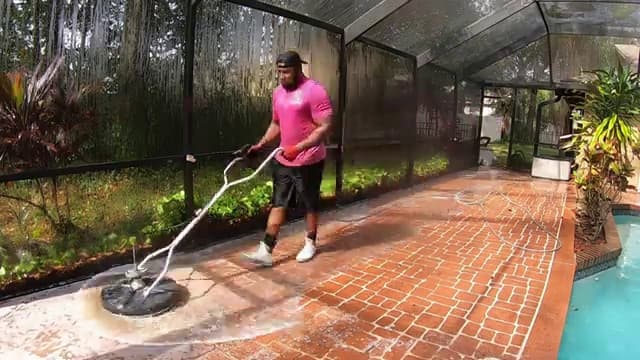
Cleaning strips the joint sand, so refilling and sealing is part of doing the job properly.
Paver cleaning and sealing →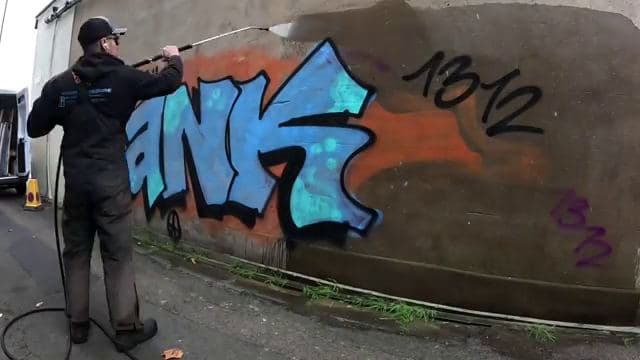
Removal of exterior graffiti, with the treatment chosen from the substrate and the type of paint or marker used on it.
Graffiti removal →A stubborn stain does not always mean the concrete needs to be replaced. Rust, oil, grease, gum and mineral discoloration each require a different approach, and the right treatment depends on the contaminant, surface and condition.
If your Jacksonville driveway, sidewalk, patio, pool deck, pavers or commercial concrete has a stain that ordinary cleaning has not removed, let us evaluate it and explain the available treatment options. Call (904) 938-8585 for rust, oil and stain removal.
Call Now